Over 90 percent of aspiring pilots cite complex entry requirements as a major hurdle in starting their aviation training. Every hopeful student must carefully navigate a mix of age limits, medical exams, language tests, and strict documentation even before setting foot in a cockpit. Understanding each step and what is expected can save you time, money, and frustration while setting you firmly on the path to earning your wings.
Table of Contents
-
Step 2: Gather Essential Documentation And Prepare Materials
-
Step 4: Engage With Online Theory Courses And Practice Exams
-
Step 5: Schedule And Complete Required Certification Examinations
-
Step 6: Verify Qualifications And Plan Future Aviation Pathways
Quick Summary
| Key Point | Explanation |
| 1. Assess eligibility criteria | Evaluate your medical fitness, age, language proficiency, and educational background to qualify for pilot training. |
| 2. Gather essential documentation | Compile required documents like identification, medical certificates, and educational diplomas to support your application. |
| 3. Enroll in accredited programs | Choose a training organization that meets EASA standards and offers a robust curriculum for pilot education. |
| 4. Master theoretical knowledge | Engage in structured online theory courses that cover key aviation subjects and include regular assessments. |
| 5. Prepare for certification exams | Schedule and comprehensively review for exams that test both theoretical knowledge and practical skills essential for licensing. |
Step 1: Assess Program Requirements and Eligibility
Deciding to become a pilot requires understanding the specific requirements and eligibility criteria for pilot training. In this step, you will explore the foundational elements that determine your readiness to start your aviation journey, guided by the comprehensive licensing framework established by the European Aviation Safety Agency (EASA).
The first critical aspect of assessing your eligibility involves examining multiple key dimensions. According to EASA, pilot licensing requirements typically encompass several fundamental areas: medical fitness, theoretical knowledge, age restrictions, and language proficiency. You will need to carefully evaluate each of these elements to determine your qualification status.
Medical certification stands as a non negotiable prerequisite for pilot training. Most training programmes require candidates to obtain at least a Class 2 medical certificate from an approved aviation medical examiner. This certification confirms you are physically and mentally capable of safely operating an aircraft. Additionally, you should be prepared to demonstrate:
-
Minimum age requirement (usually 17 for Private Pilot License)
-
Proficiency in English
-
Basic educational background
-
Physical fitness matching aviation standards
TIP: Before investing significant time and resources, contact multiple flight schools to confirm their specific entry requirements, as criteria can vary between institutions.
As you complete this assessment phase, you will gain a clear understanding of whether you meet the foundational criteria for pilot training. The next step involves selecting the most appropriate training programme that aligns with your specific qualifications and career aspirations.
Step 2: Gather Essential Documentation and Prepare Materials
Preparing the right documentation is a critical step in your pilot training journey. According to EASA, gathering comprehensive and accurate documentation forms the foundation of your licensing process, ensuring a smooth transition through your aviation career pathway.
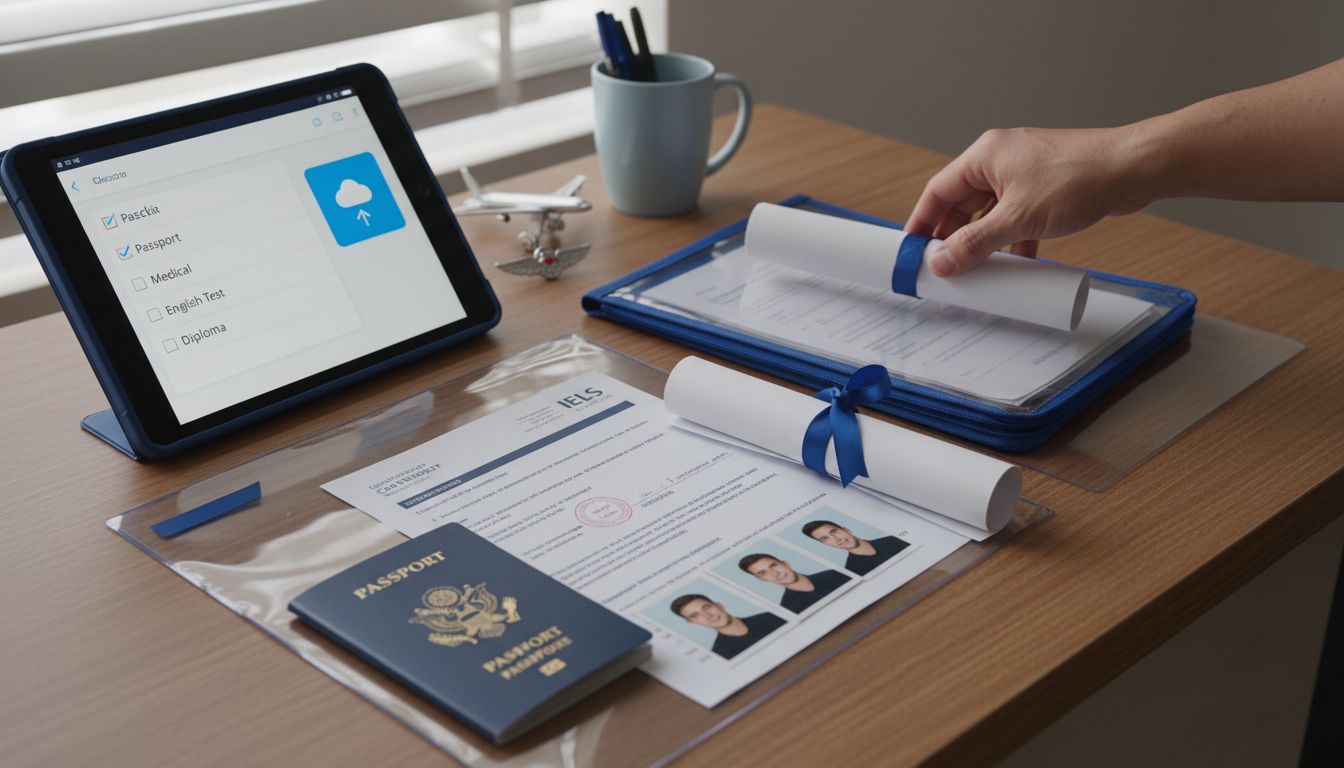
Your documentation collection will need to include several key elements that demonstrate your eligibility and preparedness for pilot training. These materials typically encompass personal identification documents, educational certificates, medical clearances, and proof of language proficiency. EASA emphasizes the importance of standardized documentation that can be electronically validated and verified.
Here are the essential documents you will need to compile:
-
Valid passport or government issued identification
-
Birth certificate
-
High school or equivalent educational diploma
-
Proof of English language proficiency
-
Medical certificate from an approved aviation medical examiner
-
Passport sized photographs
-
Proof of address
TIP: Create digital and physical copies of all documents. Store digital versions securely in cloud storage and keep original documents in a safe, waterproof folder.
As you assemble these materials, you are laying the groundwork for a successful pilot training application. The next phase involves carefully reviewing and organizing your documentation to present a comprehensive and professional application package.
Step 3: Enroll in Accredited Accelerated Pilot Programs
Choosing the right accelerated pilot program is a pivotal moment in your aviation journey. According to EASA, selecting an accredited training organisation involves understanding complex criteria that ensure high quality and professional standards in pilot education.
The enrollment process requires careful research and strategic decision making. EASA outlines specific implementing rules for training organisations across different licensing domains including Private Pilot License (PPL), Commercial Pilot License (CPL), and Airline Transport Pilot License (ATPL). When evaluating potential programs, you should focus on several key aspects:
-
Comprehensive curriculum coverage
-
Experienced instructor team
-
Modern training facilities and equipment
-
Proven track record of student success
-
Flexible learning schedules
-
Transparent pricing and payment options
TIP: Request information packets from multiple accredited training organisations and compare their curriculum, success rates, and student support services before making your final decision.
To complement your research, consider exploring our guide on how to become a pilot which provides additional insights into the pilot training landscape. As you complete your program enrollment, you are moving closer to transforming your aviation aspirations into a professional reality.
Step 4: Engage with Online Theory Courses and Practice Exams
Mastering the theoretical knowledge is a crucial component of your pilot training journey. According to EASA, theoretical training must comprehensively cover essential subjects including air law, navigation, meteorology, and communications, with knowledge acquisition demonstrated through continuous assessment and rigorous examinations.
Your online theory course will be structured to systematically build your understanding across multiple critical aviation domains. EASA highlights that theoretical training hours are carefully regulated and can potentially transfer between different pilot licence categories, making your learning investment both structured and strategic. Key focus areas will include:
-
Comprehensive study modules
-
Interactive learning materials
-
Regular self assessment quizzes
-
Detailed performance tracking
-
Exam preparation strategies
-
Mock test simulations
TIP: Develop a consistent study schedule and allocate dedicated time each day for theory learning to maintain momentum and comprehension.
To support your learning journey, we recommend exploring our ATPL theory online course which offers comprehensive preparation for your aviation examinations. As you progress through these online theory courses and practice exams, you are building the foundational knowledge essential for your future aviation career.
Step 5: Schedule and Complete Required Certification Examinations
The certification examination process represents the critical milestone in transforming your pilot training into a professional qualification. According to EASA, pilot training culminates with comprehensive examinations designed to demonstrate both theoretical knowledge and practical skill through rigorous and structured assessments.
EASA outlines specific prerequisites for certification, including minimum flight hours, theory exam results, medical certification, and language proficiency. Your examination journey will typically involve multiple stages:
-
Theoretical knowledge examinations
-
Practical skill tests
-
Medical certification verification
-
Language proficiency assessments
-
Final licensing documentation review
TIP: Create a detailed examination preparation timeline at least three months in advance, allowing sufficient time for comprehensive review and potential retakes.
To help manage the stress associated with these critical exams, consider exploring strategies for handling exam stress naturally. As you approach these certification examinations, remember that each test brings you closer to realising your professional aviation aspirations.
Step 6: Verify Qualifications and Plan Future Aviation Pathways
As you approach the culmination of your pilot training, understanding how to verify your qualifications and strategically map your aviation career becomes paramount. According to EASA, pilot progression involves a structured pathway that allows for credit transfer and incremental skill development across various licensing stages from Light Aircraft Pilot License (LAPL) to Professional Pilot License.
EASA emphasizes the importance of continuous fitness and standardized qualifications across all licence levels. Your verification process will involve carefully documenting your achievements and understanding potential career trajectories. Key considerations include:
-
Confirming current license validity
-
Identifying additional rating opportunities
-
Understanding progression requirements
-
Evaluating specialization options
-
Reviewing medical certification status
-
Tracking continuous professional development
TIP: Maintain a comprehensive portfolio of your certifications, flight hours, and training documents to support future career advancements.
To gain deeper insights into potential aviation career paths, explore our detailed guide to aviation career pathways. Your verified qualifications are not just documents but passports to exciting opportunities in the dynamic world of aviation.
Accelerate Your Pilot Career with VictorOne’s Expert Training
If you are aiming to fast-track your pilot licensing and conquer the challenges of accelerated pilot programmes, VictorOne offers a tailored solution to support your journey. We understand that mastering comprehensive theoretical knowledge while preparing for demanding certification exams can feel overwhelming. With our fully online, flexible courses designed for EASA-approved pilot licences like ATPL(A) and helicopter IR ratings, you gain access to expert guidance and interactive learning materials wherever you are.
Take charge of your aviation future today by exploring our Academy – VictorOne and accessing fully accredited, professional training that fits your schedule. Don’t let complex requirements or limited access slow you down. Visit VictorOne to register for courses, consult resources, and begin your fast-track path to becoming a licensed pilot. Every moment counts, so start now to transform your ambitions into reality.
Frequently Asked Questions
What are accelerated pilot programs?
Accelerated pilot programs are intensive training courses designed to help aspiring pilots complete their licensing requirements in a shorter timeframe. These programs often combine ground school with flight training, allowing students to progress more quickly than in traditional programs.
How can I assess my eligibility for an accelerated pilot program?
To assess your eligibility, review the specific requirements for medical fitness, age, education, and language proficiency outlined by the program. Ensure you meet these criteria before enrolling to avoid delays in your training.
What documentation do I need to enroll in an accelerated pilot program?
You will typically need to gather a valid identification document, educational certificates, a medical certificate, proof of language proficiency, and passport-sized photographs. Compile these documents to ensure a smooth enrollment process.
How do I choose the right accelerated pilot program for me?
Start by researching accredited training organizations and comparing their curriculum, instructor experience, and student success rates. Request information packets from multiple programs to evaluate which one aligns best with your career goals and learning preferences.
How can I prepare for the theory exams in an accelerated pilot program?
To prepare effectively, develop a consistent study schedule focusing on key topics such as air law, navigation, and meteorology. Incorporate regular self-assessment quizzes to track your understanding and keep pace with the course material.
What are the next steps after completing an accelerated pilot program?
After completing the program, verify your qualifications and apply for your pilot license. Evaluate additional ratings you may need and consider your long-term career pathways within aviation.