Most aspiring pilots in Central Europe discover quickly that mastering flight instruments is far more than memorizing panel layouts. A british pilot’s mistake in interpreting airspeed or altitude can lead to serious consequences, highlighting why accurate knowledge matters. These systems are not simply backup tools but provide the critical data for safe flight, especially during EASA theoretical exams. This guide reveals the truth behind common flight instrument myths, using real-world examples and up-to-date facts to sharpen your understanding.
Table of Contents
- Defining Flight Instruments And Common Myths
- Core Flight Instrument Types And Categories
- Pitot-Static And Gyroscopic Instruments: How They Work
- EASA Requirements For Instrument Certification And Usage
- Risks, Errors And Failure Modes In Flight Instruments
- Avoiding Misinterpretation And Common Mistakes
Key Takeaways
| Point | Details |
|---|---|
| Importance of Flight Instruments | Flight instruments are critical for pilot situational awareness, providing essential data for safe navigation and control. |
| Types of Instruments | Instrument categories include pitot-static, gyroscopic, and magnetic, each fulfilling distinct roles in flight monitoring. |
| Cognitive Challenges | Pilots must be aware of cognitive biases that can affect their interpretation of instrument data, necessitating systematic cross-checking. |
| EASA Certification | Obtaining EASA certification requires strict adherence to regulatory standards, demanding both technical proficiency and ongoing training for pilots. |
Defining Flight Instruments And Common Myths
Flight instruments represent the critical sensory interface between pilots and their aircraft, providing essential information about position, performance, and environmental conditions. These sophisticated technological systems transform complex aerodynamic data into readable, actionable insights that enable safe navigation and control. Aircraft instrument fundamentals have evolved dramatically from early mechanical devices to today’s advanced digital displays.
Most pilots encounter six primary flight instruments which form the foundation of situational awareness: the airspeed indicator, attitude indicator, altimeter, vertical speed indicator, heading indicator, and turn coordinator. Each instrument serves a specific purpose, measuring different aspects of flight dynamics. Contrary to popular belief, these instruments are not merely backup systems but integral components of modern aviation safety protocols. Understanding their precise functions and interdependencies is crucial for maintaining control in varying flight conditions.
Common myths about flight instruments often emerge from misunderstandings about their complexity and reliability. Some pilots incorrectly assume that advanced aircraft automatically compensate for all environmental variables, but experienced aviators know that instrument proficiency requires continuous training and active interpretation. Modern digital systems have enhanced reliability, but they do not replace the fundamental skills of pilot observation, cross-checking, and analytical decision-making.
Pro tip: Always develop a systematic instrument scan technique, treating each indicator as part of a comprehensive information network rather than isolated readouts.
Core Flight Instrument Types And Categories
Flight instruments are categorised into several fundamental types, each serving a distinct purpose in providing critical information to pilots during flight. Instrument classification systems reveal three primary technological approaches: pitot-static, gyroscopic, and magnetic instruments, which collectively ensure comprehensive aircraft performance monitoring.
Pitot-static instruments measure airspeed, altitude, and vertical movement by analysing air pressure variations. These include the airspeed indicator, altimeter, and vertical speed indicator. Gyroscopic instruments, such as the attitude indicator and heading indicator, utilise spinning mechanical gyroscopes to provide crucial information about aircraft orientation and directional stability. Magnetic instruments, like the magnetic compass, offer directional references independent of electronic systems, providing a reliable backup navigation tool.
Modern aviation has witnessed a significant transformation from traditional analog round-dial displays to sophisticated glass cockpit digital interfaces. These advanced systems integrate multiple instrument functions into comprehensive digital displays, enhancing information presentation and reducing pilot cognitive load. While digital technologies offer unprecedented precision, experienced pilots understand the importance of maintaining proficiency with both analog and digital instrument reading techniques.
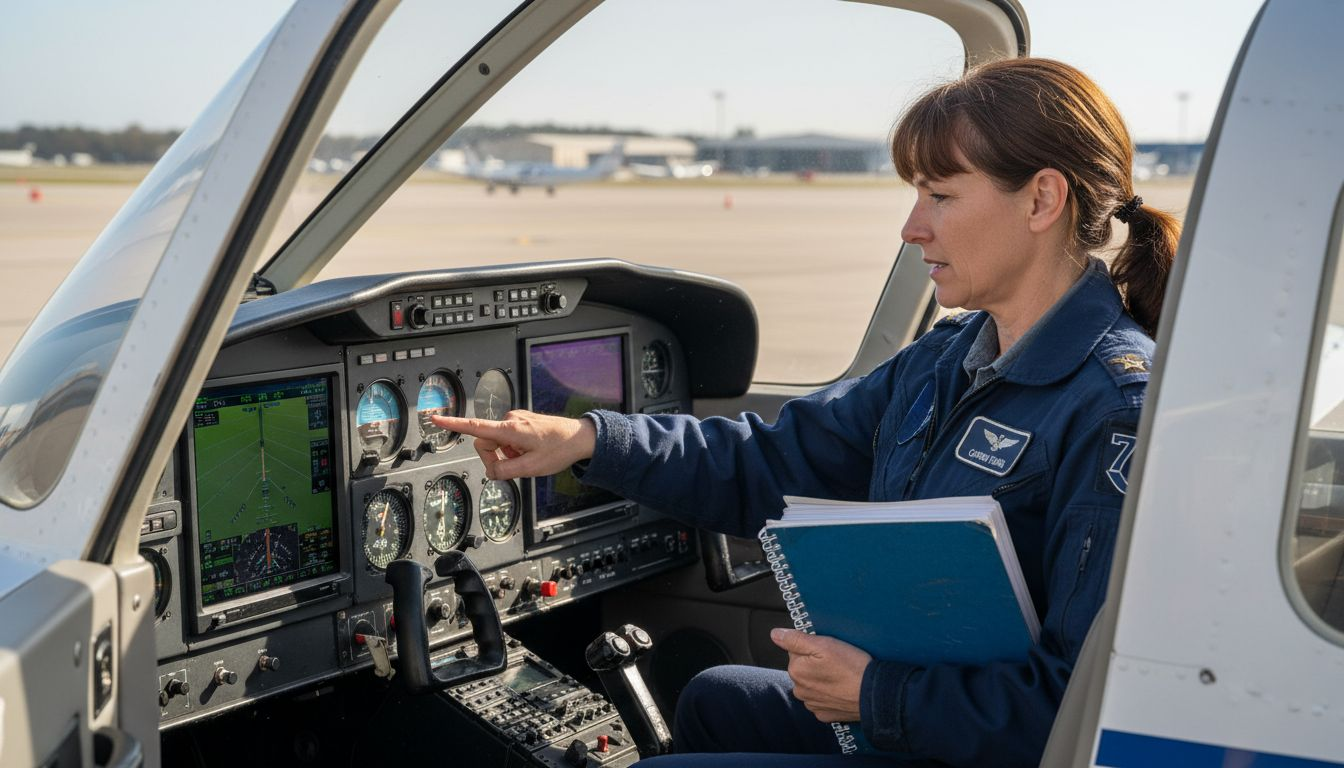
Pro tip: Always maintain a systematic instrument cross-checking routine, ensuring you can interpret both analog and digital instrument displays with equal confidence.
Pitot-Static And Gyroscopic Instruments: How They Work
Pitot-static systems form a critical component of aircraft instrumentation, utilising precise pressure measurement techniques to provide essential flight data. Instrument performance principles reveal how these sophisticated systems translate atmospheric pressure variations into actionable flight information through interconnected sensors and indicators.
The pitot-static system operates through a network of tubes and chambers that measure air pressure differentials. The pitot tube, typically mounted on the aircraft’s exterior, collects ram air pressure, while static ports measure ambient atmospheric pressure. These pressure readings enable critical instruments like the airspeed indicator to calculate velocity, the altimeter to determine aircraft height, and the vertical speed indicator to track rate of climb or descent. Pilots must understand that these instruments rely on precise pressure measurements, making regular calibration and maintenance absolutely essential.
Gyroscopic instruments represent another fundamental technological approach in aviation instrumentation. These devices utilise spinning mechanical gyroscopes to maintain a consistent reference point, providing crucial information about aircraft orientation and movement. The attitude indicator, for instance, uses a precisely balanced gyroscope to display the aircraft’s pitch and roll relative to the horizon, while the heading indicator offers directional stability information. Modern aircraft increasingly incorporate electronic and laser-based gyroscopic systems, which provide enhanced reliability and reduced mechanical wear compared to traditional mechanical counterparts.
Below is a summary table highlighting the core differences between pitot-static and gyroscopic flight instruments:
| Aspect | Pitot-Static Instruments | Gyroscopic Instruments |
|---|---|---|
| Measurement Principle | Air pressure variation | Rotating gyroscope stability |
| Main Functions | Airspeed, altitude, vertical speed | Attitude, heading, orientation |
| Maintenance Considerations | Regular calibration, check for blockages | Monitor for mechanical wear, alignment checks |
| Modern Advancements | Integrated electronic sensors | Laser-based and electronic gyros |
Pro tip: Always perform a thorough pre-flight instrument check, paying special attention to pitot-static system integrity and gyroscopic instrument alignment to ensure accurate flight information.
EASA Requirements For Instrument Certification And Usage
The European Union Aviation Safety Agency (EASA) maintains rigorous standards for flight instrument certification, ensuring the highest levels of aviation safety across member states. Aircraft instrument regulations establish comprehensive guidelines that govern every aspect of flight instrument design, installation, and operational performance, creating a unified framework for aviation technology in Europe.
To obtain EASA instrument certification, manufacturers and aviation operators must demonstrate comprehensive compliance across multiple critical domains. The certification process involves exhaustive testing of instrument accuracy, reliability, and performance under diverse environmental conditions. Key requirements include proving instrument precision within specified tolerances, demonstrating resistance to electromagnetic interference, ensuring mechanical durability, and providing comprehensive documentation that tracks the instrument’s entire development and validation process. These stringent protocols apply to both traditional analog instruments and modern digital flight displays, reflecting EASA’s technology-neutral approach to safety regulation.
Pilots seeking instrument rating must navigate a complex landscape of regulatory requirements. The certification process demands not only technical proficiency with instruments but also a deep understanding of their operational limitations. EASA mandates periodic instrument calibration, maintenance documentation, and ongoing training to ensure pilots remain current with evolving technological standards. Additionally, different instrument types may require specific endorsements or additional qualifications, making continuous professional development an essential component of maintaining instrument certification.
Pro tip: Maintain meticulous records of your instrument training, calibration certificates, and professional development to streamline your EASA certification process and demonstrate consistent technical competence.
Risks, Errors And Failure Modes In Flight Instruments
Flight instruments represent complex technological systems vulnerable to multiple failure modes that can critically compromise aircraft safety. Comprehensive flight instrument risks demonstrate that instrument failures are rarely singular events, but typically result from interconnected mechanical, electrical, and environmental vulnerabilities.
The most prevalent instrument failure modes include sensor blockages, electrical system interruptions, mechanical gyroscope degradation, and environmental interference. Pitot-static system obstructions represent a particularly dangerous risk, where ice, debris, or improper maintenance can cause airspeed indicators to provide inaccurate readings. Electronic instrument displays are susceptible to electromagnetic interference, software glitches, and power supply fluctuations that can instantaneously compromise critical flight information. These risks underscore the importance of rigorous pre-flight inspections, regular calibration, and pilots’ ability to cross-reference multiple instrument sources during flight.
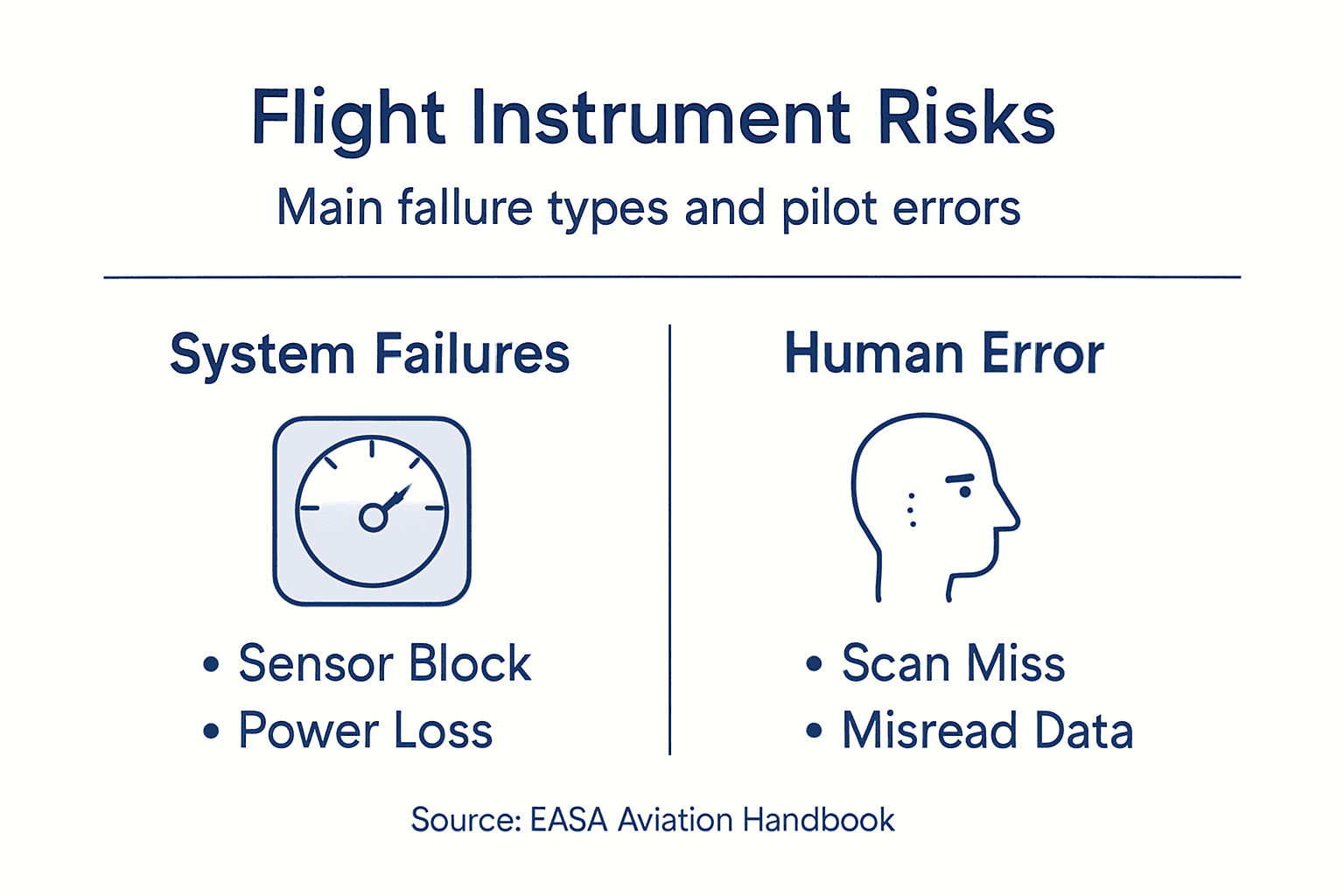
Human error remains a significant contributing factor in instrument-related aviation incidents. Pilots must develop sophisticated cognitive strategies for recognising instrument anomalies, understanding potential failure scenarios, and maintaining situational awareness. This involves not just technical knowledge, but also psychological preparedness to respond calmly and systematically when instrument inconsistencies emerge. Training programmes increasingly emphasise developing pilots’ capacity to distinguish between genuine instrument failures and temporary environmental disruptions, enabling more nuanced and safer decision-making processes.
Pro tip: Develop a robust instrument cross-checking routine that allows you to quickly identify and respond to potential instrument inconsistencies during flight.
Avoiding Misinterpretation And Common Mistakes
Spatial awareness represents a critical skill for pilots navigating complex instrument environments, where cognitive biases can significantly compromise decision-making. Spatial disorientation risks highlight the profound psychological challenges pilots face when interpreting flight instruments, particularly during moments of sensory confusion or environmental stress.
Common misinterpretation errors typically emerge from three primary sources: expectation bias, confirmation bias, and visual illusion interference. Expectation bias occurs when pilots unconsciously interpret instrument readings based on preconceived expectations rather than actual data. Confirmation bias leads pilots to selectively focus on instrument information that validates their existing mental model, potentially overlooking critical contradictory signals. Visual illusions, particularly during challenging weather conditions or night flying, can create perceptual distortions that dramatically conflict with instrument readings, demanding exceptional cognitive discipline.
Effective mitigation strategies require systematic training and deliberate cognitive techniques. Pilots must develop a disciplined cross-checking methodology, treating each instrument as an independent data point rather than assuming consistent reliability. This involves creating mental models that anticipate potential misinterpretation scenarios, practicing deliberate scanning techniques, and maintaining psychological flexibility. Advanced training programmes increasingly incorporate realistic simulator scenarios that deliberately introduce instrument anomalies, training pilots to recognize and respond to potential misinterpretation risks before they become critical safety challenges.
The following reference table clarifies common cognitive errors and best mitigation strategies for pilots interpreting flight instruments:
| Cognitive Error | Typical Cause | Mitigation Strategy |
|---|---|---|
| Expectation Bias | Preconceived assumptions | Use systematic instrument scans |
| Confirmation Bias | Selective data attention | Train for cross-checking procedures |
| Visual Illusion | Poor visibility or lighting | Practise interpretation in simulators |
Pro tip: Practice instrument interpretation under controlled simulation environments, deliberately introducing unexpected variables to enhance your cognitive flexibility and pattern recognition skills.
Master Flight Instruments With Confidence Through Professional Training
Understanding complex flight instruments and mastering their interpretation is essential for every pilot aiming for EASA certification. This article highlights critical challenges such as instrument cross-checking, recognising failure modes, and avoiding common cognitive errors. If you want to transform this knowledge into practical skills, our comprehensive online courses can guide you step-by-step through these crucial elements of aviation theory and instrument mastery.
Take control of your pilot career today by enrolling in advanced aviation theory training at Academy – VictorOne. Explore specialised modules on flight systems and instrumentation designed to sharpen your understanding and decision-making. Enhance your preparation with flexible study options and expert online consultations at VictorOne. For essential aircraft operation insights, delve into our Aircraft – VictorOne resources. Start your journey now and ensure your EASA licence success by visiting https://victorone.eu.
Frequently Asked Questions
What are the primary flight instruments used by pilots?
The primary flight instruments include the airspeed indicator, attitude indicator, altimeter, vertical speed indicator, heading indicator, and turn coordinator, each providing crucial data for navigation and control.
How do pitot-static and gyroscopic instruments work?
Pitot-static instruments measure air pressure variations to determine airspeed, altitude, and vertical speed, whereas gyroscopic instruments use spinning gyroscopes to display the aircraft’s orientation and maintain directional stability.
What are common risks and failure modes associated with flight instruments?
Common risks include sensor blockages, electrical interruptions, mechanical wear, and environmental interference, which can lead to inaccurate flight data and critical safety issues.
How can pilots avoid misinterpretation errors when using flight instruments?
Pilots should implement systematic cross-checking routines, practice disciplined scanning techniques, and develop cognitive strategies to recognise and counteract common biases that may affect interpretation of instrument readings.