Did you know that pilots must master over twelve key subjects before earning a commercial license? Becoming an airline pilot involves much more than flying a plane. With online ATPL courses, students gain access to flexible training that balances work, personal commitments, and study. This pathway opens aviation careers to a wider group, offering structured learning and real-world preparation for one of the most challenging industries.
Table of Contents
Key Takeaways
| Point | Details |
| ATPL Course Importance | An ATPL online course is essential for aspiring pilots, providing the theoretical foundation necessary for professional certification in commercial aviation. |
| Course Types | Prospective pilots can choose between Integrated and Modular ATPL courses, each offering distinct structures and flexibility to match individual learning preferences. |
| Eligibility Requirements | Candidates must meet specific age, educational, and medical criteria to enroll in ATPL courses, ensuring they are prepared for the challenges of pilot training. |
| Continuous Learning | Successful pilots prioritize continuous education, keeping abreast of evolving aviation regulations and technologies to enhance professional competencies. |
ATPL Online Course Defined and Core Concepts
An Air Transport Pilot License (ATPL) online course represents the comprehensive theoretical training pathway for aspiring commercial pilots seeking professional certification. According to EASA, these integrated courses combine theoretical knowledge and practical flight training into a continuous, pedagogically structured programme designed to transform aviation enthusiasts into professional pilots.
The core concept of an ATPL online course revolves around providing flexible, accessible theoretical training that prepares students for the rigorous knowledge requirements of commercial aviation. These courses typically cover an extensive curriculum including:
-
Aerodynamics and aircraft systems
-
Navigation and flight planning
-
Meteorological principles
-
Flight performance and operational procedures
-
Aircraft instrumentation and communication protocols
-
Comprehensive aviation regulations and safety standards
At its foundation, an ATPL online course serves as a critical stepping stone for pilots transitioning from private to commercial aviation. By offering a structured yet flexible learning environment, these programmes enable students to acquire complex aviation knowledge without geographical constraints. Our comprehensive ATPL Theory Online Course provides aspiring pilots with a structured pathway to meet EASA’s stringent theoretical knowledge requirements, allowing learners to progress at their individual pace while maintaining professional-grade educational standards.
The strategic design of these online courses ensures that theoretical learning is not just about memorising facts, but understanding intricate aviation systems and developing critical decision-making skills. Students engage with interactive modules, practice exams, and comprehensive study materials that simulate real-world aviation scenarios, preparing them comprehensively for both theoretical examinations and future professional challenges in commercial aviation.
Course Types and EASA Certification Explained
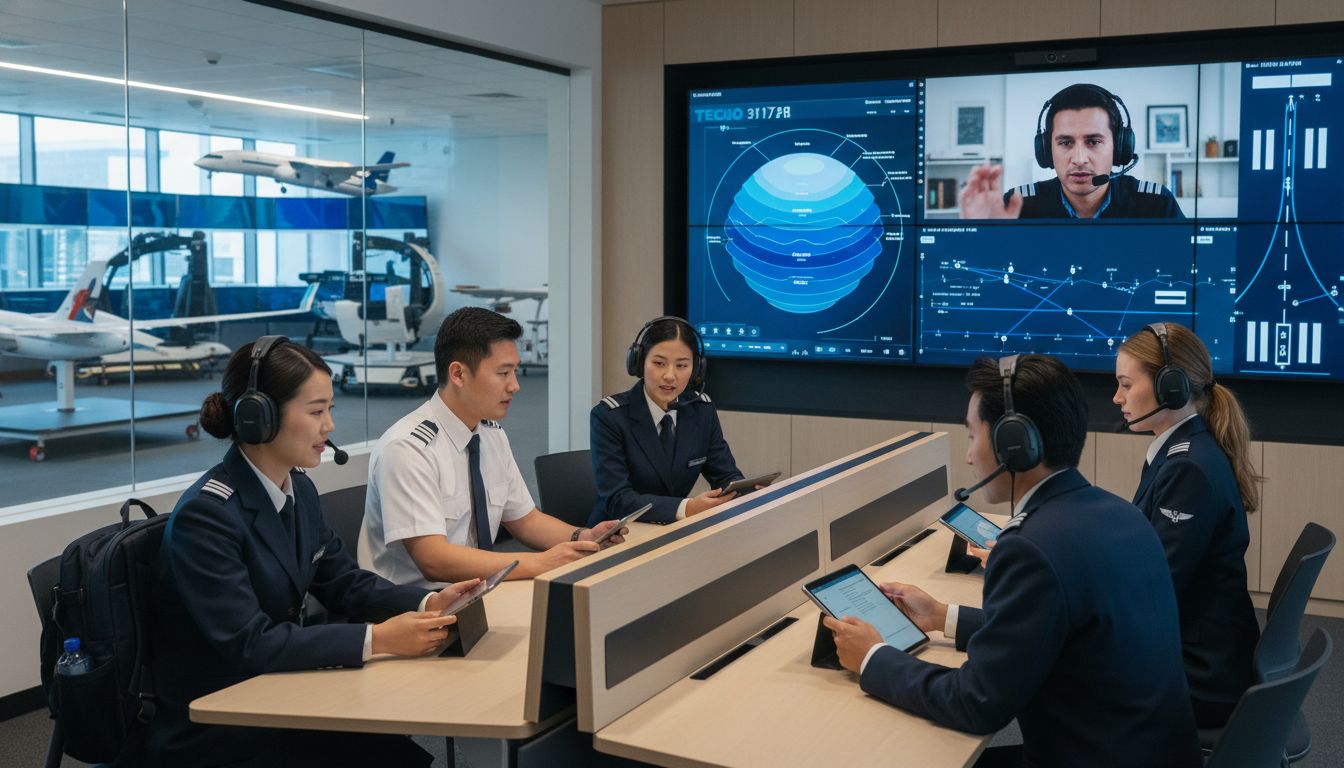
Understanding the landscape of ATPL course types is crucial for aspiring commercial pilots navigating their professional training journey. EASA strictly regulates pilot training, emphasising that all ATPL training must be conducted in an Approved Training Organisation (ATO) under direct European oversight, with specific certification boundaries that pilots must carefully navigate.
Primarily, ATPL training comes in two distinct formats:
- Integrated ATPL Course
-
Comprehensive programme combining theoretical and practical training
-
Continuous, structured curriculum from zero experience to commercial pilot
-
Typically completed in 18-24 months
-
Most direct route to becoming a commercial pilot
- Modular ATPL Course
-
Flexible training pathway allowing step-by-step progression
-
Can be completed while working or studying
-
Individual modules can be completed at learner’s own pace
-
Suitable for career changers or part-time students
Each course type offers unique advantages, but both must meet rigorous EASA certification standards. The critical distinction lies in the learning approach and individual student requirements. Integrated courses provide a structured, immersive experience, while modular courses offer greater flexibility and potential cost-effectiveness.
The certification process involves comprehensive theoretical examinations and practical skill assessments, ensuring that pilots meet the highest international aviation standards.
Here’s a comparison of the two main ATPL course types:
| Feature | Integrated ATPL Course | Modular ATPL Course |
| Structure | Continuous Full-time |
Step-by-step Flexible |
| Duration | 18-24 months | Varies Self-paced |
| Entry Requirements | Typically no prior licence required | PPL or other Can start at any stage |
| Ideal for | Career starters Full-time learners |
Career changers Working professionals |
| Flexibility | Lower Fixed schedule |
Higher Customisable schedule |
| Typical Cost | Higher | Potentially lower Pay per module |
| Learning Environment | Immersive Cohort-based |
Independent Personalised progression |
| EASA Approval Needed | Yes | Yes |
| Aspiring pilots must carefully select a training path that aligns with their personal circumstances, career goals, and learning preferences, understanding that EASA certification represents a rigorous benchmark of professional aviation competence |
.
Flexible Learning: Structure, Materials, and Schedule
Online ATPL courses represent a revolutionary approach to pilot training, offering unprecedented flexibility in learning structure and content delivery. EASA recognises this flexibility, providing guidelines that allow up to 50% of flight training time to be credited through advanced simulation technologies, demonstrating the modern aviation training ecosystem’s adaptability.
The typical flexible learning structure encompasses several key components:
-
Digital Learning Modules
-
Self-paced theoretical instruction
-
Interactive multimedia content
-
24/7 access to learning materials
-
Comprehensive subject coverage
-
-
Adaptive Scheduling
-
Customisable study timelines
-
Weekend and evening learning options
-
Ability to balance training with existing work/personal commitments
-
Personalised progression tracking
-
Training materials in modern ATPL online courses are designed to be comprehensive and engaging. Our comprehensive ATPL Theory Online Course provides digital textbooks, video lectures, interactive simulations, and practice exams that mirror real-world aviation scenarios. According to EASA guidelines, these materials must meet strict educational standards while providing flexibility in how students can absorb and demonstrate their knowledge.
The schedule flexibility extends beyond digital learning. Aspiring pilots can now design training programmes that fit their individual lifestyles, with modular approaches allowing students to complete theoretical and practical components at their own pace. This approach democratises pilot training, making it accessible to career changers, working professionals, and international students who previously might have found traditional training models prohibitively restrictive.
Eligibility, Enrollment, and Exam Process
Navigating the path to becoming a commercial pilot involves understanding the intricate eligibility requirements and examination process. EASA provides clear guidelines for candidates entering ATPL integrated courses, offering flexibility for both ab-initio students and those holding a Private Pilot License (PPL), with potential credits of up to 50% for existing flight hours.
Eligibility criteria typically include:
- Age Requirements
-
Minimum age of 17 years
-
Must be eligible to hold a Class 1 Medical Certificate
-
No maximum age limit for theoretical training
- Educational Prerequisites
-
High school diploma or equivalent
-
Proficient English language skills
-
Basic mathematics and physics understanding
The enrollment process for an ATPL online course involves several critical steps:
-
Initial application and document verification
-
Medical examination and certification
-
Selection of integrated or modular training path
-
Payment of course fees or arranging financing
Preparing for ATPL exams requires a strategic approach. The examination process is comprehensive, typically involving multiple theoretical knowledge exams covering subjects like air law, aircraft general knowledge, flight performance, meteorology, navigation, and operational procedures. Each exam tests both theoretical understanding and practical application of aviation principles.
Successful candidates must demonstrate not just academic knowledge, but a holistic understanding of aviation safety, regulations, and professional conduct. The exam process is designed to ensure that only the most competent and dedicated individuals progress towards becoming commercial pilots, maintaining the highest standards of safety and professionalism in the aviation industry.
Professional Outcomes and Common Pitfalls
The journey to becoming a professional pilot extends far beyond passing theoretical examinations, with professional outcomes deeply influenced by continuous learning and adaptability. EASA emphasises that syllabus updates, such as recent changes in fuel management requirements, can significantly impact a pilot’s theoretical knowledge and professional preparedness.
Common pitfalls for aspiring pilots include:
-
Outdated Study Materials
-
Relying on old textbooks and resources
-
Ignoring recent regulatory changes
-
Failing to update knowledge continuously
-
Overlooking technological advancements
-
-
Skill Development Gaps
-
Focusing solely on theoretical knowledge
-
Neglecting practical flight skills
-
Poor time management during training
-
Insufficient understanding of industry technologies
-
Understanding the nuanced requirements for ATPL certification requires more than just academic prowess. EASA’s Area 100 Knowledge, Skills & Attitudes (KSA) framework highlights the importance of holistic training that goes beyond traditional examination models, emphasising comprehensive professional development.
Successful pilots distinguish themselves by maintaining a proactive approach to learning, staying updated with industry trends, and developing a robust skill set that encompasses technical knowledge, practical abilities, and professional attitudes. The aviation industry demands continuous adaptation, with professionals who demonstrate flexibility, critical thinking, and a commitment to ongoing education being best positioned for long-term career success.
Take Control of Your Aviation Career with VictorOne
Embarking on the journey of an ATPL online course requires more than just dedication it demands a training partner that understands the challenges of balancing flexibility with rigorous EASA standards. At VictorOne, we specialise in delivering fully online, EASA-approved theoretical courses designed to fit your lifestyle while preparing you thoroughly for all essential pilot licensing exams. Whether you are just starting or progressing through modular training, our tailored materials and expert support keep you on track towards your dream career.
Ready to master complex aviation knowledge with ease and confidence Explore our Academy – VictorOne for comprehensive ATPL theory courses featuring rich multimedia content and interactive question banks. Join thousands of aspiring commercial pilots who trust VictorOne for quality, flexibility, and a seamless learning experience Visit https://victorone.eu today and take the first step towards your professional pilot licence.
Frequently Asked Questions
What is an ATPL online course?
An ATPL online course is a comprehensive theoretical training program for aspiring commercial pilots that prepares them for the Air Transport Pilot License certification. It combines both theoretical knowledge and practical flight training to equip students with the necessary skills for a professional aviation career.
What are the main types of ATPL courses available?
There are two primary types of ATPL courses: Integrated ATPL courses, which provide a continuous, structured learning experience, and Modular ATPL courses, which allow students to progress at their own pace by completing individual modules.
What are the eligibility requirements for enrolling in an ATPL online course?
Eligibility typically includes being at least 17 years old, having a high school diploma or equivalent, possessing proficient English language skills, and understanding basic mathematics and physics. A Class 1 Medical Certificate is also needed.
How is the examination process structured for ATPL certification?
The examination process involves multiple theoretical knowledge exams covering a range of subjects, including air law, aircraft general knowledge, flight performance, and operational procedures. Successful candidates must demonstrate both academic and practical application of aviation principles.