Did you know that training for a Commercial Pilot License in Europe can cost between €50,000 and €120,000? For anyone with dreams of flying professionally, understanding this credential is the first step toward a career in aviation. With strict requirements and competing training paths, knowing what sets the Commercial Pilot License apart helps future pilots plan smarter and avoid costly surprises along the way.
Table of Contents
- What Defines a Commercial Pilot License
- EASA CPL Categories And Training Structure
- Breakdown Of CPL Training And Exam Costs
- Hidden Fees And Additional Expenses Explained
- Comparing CPL Costs: Europe Versus Global Markets
Key Takeaways
| Point | Details |
|---|---|
| CPL Definition | A Commercial Pilot License (CPL) is a professional qualification allowing pilots to operate aircraft for compensation, emphasizing advanced knowledge and flight proficiency requirements. |
| EASA CPL Categories | EASA offers various CPL training categories tailored to different career paths, including Integrated, Modular, and Helicopter-specific programs. |
| Training Costs | Aspiring pilots must budget between €50,000 and €120,000 for CPL training, factoring in both standard costs and additional hidden expenses. |
| Global Cost Variations | CPL training costs vary significantly between Europe and global markets due to differing regulatory standards and living expenses, impacting financial planning for aspiring pilots. |
What Defines a Commercial Pilot License
A Commercial Pilot License (CPL) represents a professional aviation qualification that authorises pilots to fly aircraft for financial compensation. According to Understanding Commercial Pilot Requirements, this licence represents a critical milestone in a pilot’s professional development, enabling them to transition from recreational flying to earning an income through their aviation skills.
As defined by the European Union Aviation Safety Agency (EASA), a Commercial Pilot License allows individuals to operate aircraft for hire and remuneration, with specific theoretical and practical competency requirements. The licence builds upon foundational certifications like the Private Pilot License (PPL), demanding more advanced training and demonstrating higher levels of aviation proficiency.
Key characteristics of a Commercial Pilot License include:
- Advanced theoretical knowledge across multiple aviation disciplines
- Minimum flight hour requirements for practical experience
- Comprehensive understanding of aircraft systems and operational procedures
- Proven ability to manage complex flight scenarios safely
- Successful completion of both written examinations and practical flight tests
To obtain a CPL, pilots must meet stringent standards set by national aviation authorities. These standards ensure that commercial pilots possess the technical skills, decision-making capabilities, and professional standards necessary to operate aircraft in commercial aviation environments safely and effectively.
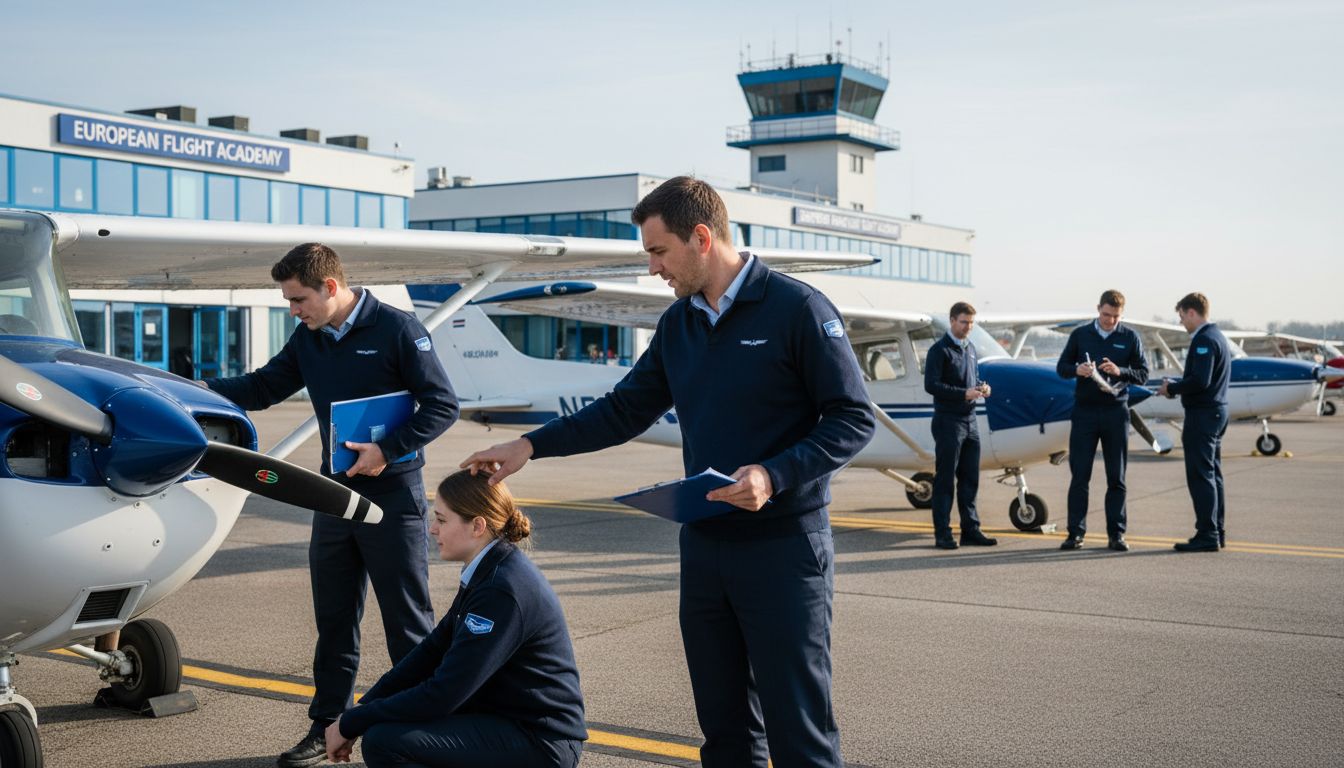
EASA CPL Categories and Training Structure
The European Union Aviation Safety Agency (EASA) provides comprehensive guidelines for Commercial Pilot License (CPL) categories, offering multiple training pathways to accommodate different aviation career aspirations. According to Is EASA ATPL Higher than CPL? Discover the Difference, these categories are designed to provide flexible training options for aspiring commercial pilots.
EASA recognises several distinct CPL training categories, each tailored to specific aviation requirements:
- CPL(A) Integrated: A comprehensive training programme for ab-initio pilots
- CPL(A) Modular: Flexible training route for existing pilots with prior experience
- CPL/IR Integrated: Combined commercial pilot and instrument rating programme
- CPL(H): Specific category for helicopter pilot training
Each category has unique theoretical instruction hours, flight training requirements, and practical experience standards. According to EASA’s Aircrew Regulation, these structured pathways ensure pilots develop the necessary skills and knowledge to operate aircraft professionally and safely across different aviation environments.
The choice between these categories depends on individual career goals, prior aviation experience, and personal learning preferences. Aspiring pilots must carefully evaluate each pathway to select the most suitable training structure that aligns with their professional aviation ambitions.
Here’s a comparison of the main EASA CPL training categories:
| Category | Suitable For | Structure |
|---|---|---|
| CPL(A) Integrated | Beginners (ab-initio) | Full-time, structured course |
| CPL(A) Modular | Existing pilots | Flexible, staged modules |
| CPL/IR Integrated | Commercial pilots needing IR | Combined CPL & Instrument rating |
| CPL(H) | Aspiring helicopter pilots | Helicopter-focused training |
Breakdown of CPL Training and Exam Costs
Becoming a commercial pilot involves significant financial investment across multiple training components. How to Prepare for EASA ATPL exams: 5 Essential Steps highlights the complexity of navigating these expenses, which typically encompass theoretical instruction, practical flight training, and examination fees.
The primary cost categories for Commercial Pilot License training include:
- Theoretical Training: Ground school instruction and study materials
- Flight Training: Practical flying hours with certified instructors
- Examination Fees: Written tests and practical skill assessments
- Medical Certification: Required aviation medical examinations
- Equipment and Supplies: Pilot headsets, navigation tools, and study resources
According to EASA’s Fees and Charges regulation, training costs are influenced by several factors including the specific CPL category, training organisation certification, and individual programme complexity. Aspiring pilots should anticipate total training investments ranging from €50,000 to €120,000, depending on the chosen training pathway and location.
Careful financial planning is crucial for prospective commercial pilots. Potential funding options include personal savings, bank loans, sponsored programmes, and scholarships specifically designed for aviation students. Understanding the comprehensive cost structure allows candidates to make informed decisions about their professional pilot training journey.
Hidden Fees and Additional Expenses Explained
Beyond the standard training costs, aspiring commercial pilots must be prepared for a range of hidden expenses that can significantly impact their financial planning. Understanding Commercial Pilot License Requirements highlights the complexity of navigating these unexpected financial considerations in professional pilot training.
Key hidden fees and additional expenses include:
- Mandatory Software and Digital Resources: Online learning platforms, navigation software
- Uniform and Professional Attire: Required pilot shirts, blazers, and accessories
- Insurance Costs: Personal liability and training insurance
- Additional Medical Screenings: Periodic health checks beyond initial certification
- Transportation and Accommodation: Expenses related to training location and flight school requirements
According to EASA’s Fees and Charges documentation, training organisations may levy separate approval charges for each additional course or specialisation, which can incrementally increase overall training expenses. These administrative fees are often not immediately apparent during initial course enrollment but can represent substantial additional investment for pilots pursuing comprehensive training.
Prospective pilots should budget approximately 15-25% above their estimated base training costs to accommodate these hidden expenses. Maintaining a financial buffer and conducting thorough research into potential additional charges can help prevent unexpected financial strain during the challenging journey of becoming a commercial pilot.
Comparing CPL Costs: Europe Versus Global Markets
Navigating the financial landscape of Commercial Pilot License (CPL) training reveals significant variations across different global markets. Is EASA ATPL Higher than CPL? Discover the Difference provides critical insights into the nuanced cost structures that aspiring pilots must consider when planning their aviation careers.
Key cost comparison factors between European and global markets include:
- Regulatory Compliance: EASA’s standardised training requirements versus varied international standards
- Training Hour Requirements: Potential differences in minimum practical and theoretical training hours
- Certification Fees: Variations in administrative and examination costs
- Infrastructure Investment: Variations in flight school facilities and technology
- Living Expenses: Regional differences in accommodation and training location costs
According to EASA’s regulatory framework, European markets benefit from a uniform certification approach, which provides consistent training standards across member states. This standardisation can potentially create more predictable cost structures compared to regions with more fragmented regulatory environments. Typical CPL training costs in Europe range from €50,000 to €120,000, while global markets may see variations from €40,000 to €150,000 depending on local aviation infrastructure and regulatory complexity.
Prospective pilots must conduct thorough research into regional differences, considering not just upfront costs but also long-term career opportunities and international recognition of their specific training pathway. Understanding these nuanced market variations can help make more informed financial decisions in pursuing a commercial pilot career.
Take Control of Your Commercial Pilot Training Costs Today
Understanding the full scope of Commercial Pilot License expenses can feel overwhelming with hidden fees and varying training options. This article highlights the challenges of managing your budget while aiming to meet EASA CPL requirements and choosing the right training pathway. If your goal is to navigate these complexities confidently and avoid unexpected costs, professional support with flexible learning solutions is crucial.
VictorOne.eu offers exactly that through our Academy – VictorOne platform.
Our fully online EASA-approved theoretical courses are designed to give you control over your schedule and costs, helping you prepare efficiently for your CPL exams. Start your journey with comprehensive digital materials, interactive question banks and dedicated online consultations from anywhere in the world. To explore tailored training options and make informed financial decisions for your aviation career, visit our main site at VictorOne.eu now. Let us be your trusted guide through the complexities of commercial pilot licensing and help you achieve your dream with confidence.
Frequently Asked Questions
What are the main costs associated with obtaining a Commercial Pilot License (CPL)?
The primary costs for obtaining a CPL include theoretical training, flight training with certified instructors, examination fees, medical certification, and necessary equipment and supplies.
How much can I expect to spend on CPL training?
Total training investments for CPL can range from €50,000 to €120,000, depending on the chosen training pathway and location.
Are there hidden fees associated with CPL training?
Yes, aspiring pilots should be aware of hidden fees such as mandatory software and digital resources, uniform costs, insurance, additional medical screenings, and transportation and accommodation expenses.
How do CPL costs compare between Europe and other global markets?
CPL costs vary globally, with European training typically ranging from €50,000 to €120,000, while international markets may see costs from €40,000 to €150,000 depending on local training infrastructure and regulatory requirements.