Over 80 percent of british pilot trainees cite medical assessments as their greatest source of anxiety in helicopter training. Meeting strict health and qualification standards is the first step to pursuing a helicopter pilot career in the UK, making the process feel daunting for many. This guide breaks down every stage, from medical requirements to certification, providing clear advice so you can approach your flying ambitions with confidence and practical know-how.
Table of Contents
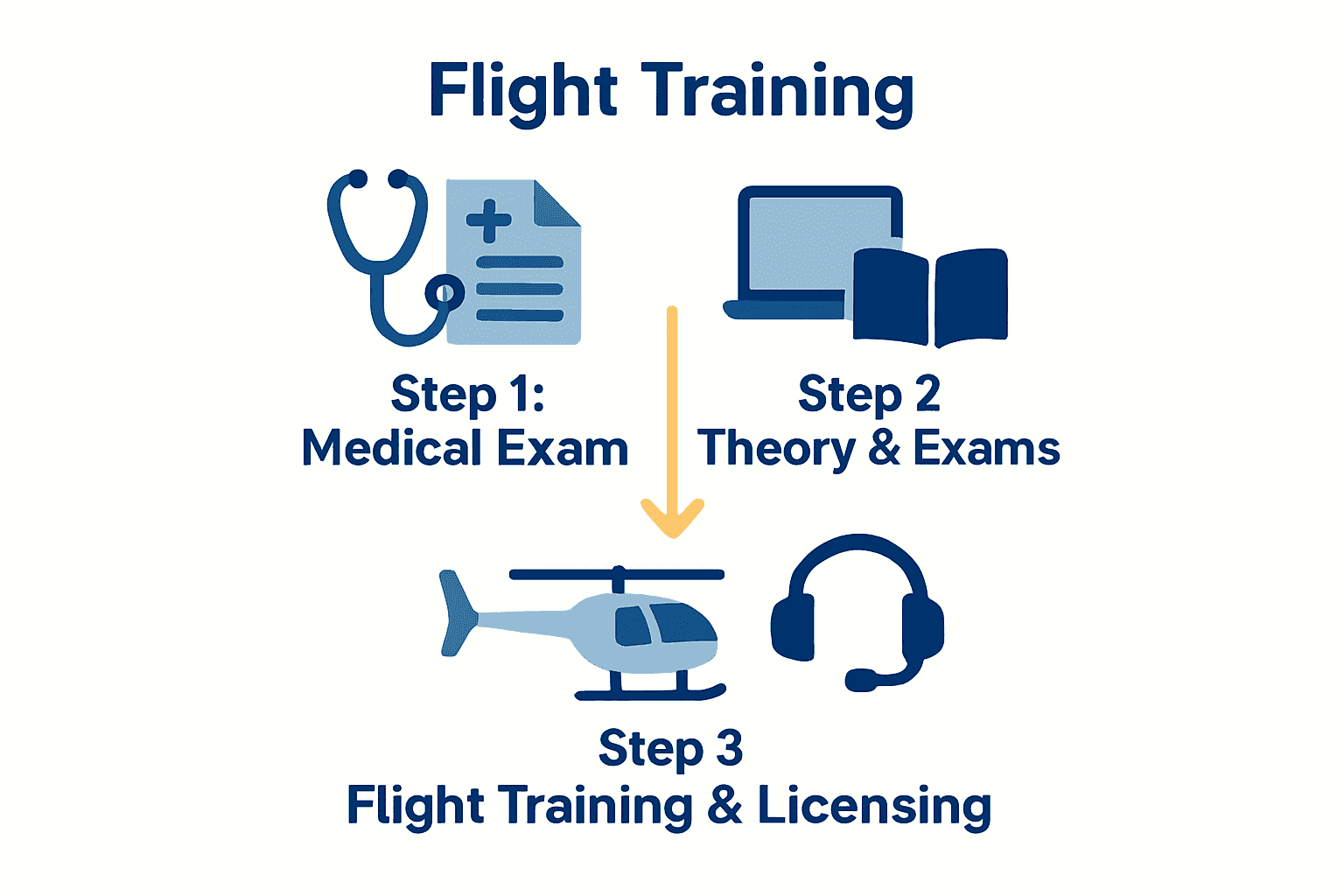
- Step 1: Assess Entry Requirements And Medical Fitness
- Step 2: Select And Enrol In An EASA-Approved Training Course
- Step 3: Complete Online Theoretical Studies And Examinations
- Step 4: Undertake Practical Helicopter Flight Training
- Step 5: Pass Licensing Tests And Verify Certification
Quick Summary
| Key Point | Explanation |
|---|---|
| 1. Obtain a Class 2 Medical Certificate | Ensure you meet health requirements via a comprehensive examination by an authorised aeromedical examiner. |
| 2. Choose an EASA-Approved Training Course | Enrol in a structured course that includes extensive ground and flight training hours across multiple helicopter types. |
| 3. Complete Theoretical Studies Online | Engage in up to 650 hours of studies on aviation topics, using interactive modules and practice exams. |
| 4. Undertake Practical Flight Training | Gain hands-on experience with dual instruction, focusing on essential flying skills and emergency protocols. |
| 5. Pass Licensing Tests for Certification | Successfully complete theoretical and practical exams to receive your helicopter pilot licence from the national authority. |
Step 1: Assess Entry Requirements and Medical Fitness
Becoming a helicopter pilot means ensuring your health meets strict aviation standards. According to the EASA, medical certification is a critical prerequisite for entering pilot training, with specific health requirements that must be carefully evaluated.
To start your journey, you will need to obtain a valid medical certificate appropriate for your desired licence. For most helicopter pilot training programmes, this means securing at least a Class 2 medical certificate. The assessment involves a comprehensive medical examination conducted by an authorised aeromedical examiner who will evaluate your overall physical and mental fitness for flying. This examination typically includes detailed checks of your vision, hearing, cardiovascular health, neurological function, and general physical condition.
The medical assessment can feel intimidating, but understanding the process helps. Bring all relevant medical history documents, be honest about your health conditions, and prepare for a thorough examination. Any pre-existing medical conditions do not automatically disqualify you but may require additional documentation or specialist assessment from the aviation medical authority.
TIP: Schedule your medical examination well in advance of beginning training, as processing times and potential follow up assessments can vary.
Once you successfully complete your medical examination and receive your certificate, you are one step closer to transforming your pilot aspirations into reality. The next phase will involve selecting an appropriate flight training programme that matches your medical certification and personal goals.
Step 2: Select and Enrol in an EASA-Approved Training Course
Selecting the right helicopter pilot training course is a critical step in transforming your aviation dreams into reality. According to EASA, integrated helicopter training courses require approximately 350 hours of ground training and 100 hours of flight test training across multiple helicopter types.
When evaluating training programmes, focus on EASA-approved institutions that offer comprehensive and structured curricula. EASA recommends examining training organisations that incorporate advanced flight simulation technologies, which can provide additional flexibility in your learning process. Look for programmes that offer a balanced mix of theoretical knowledge and practical flight training, including simulator hours that can count towards your type-rating and proficiency requirements.
Research multiple training providers, compare their course structures, instructor qualifications, and student success rates. Request detailed information about their curriculum, including ground school modules, flight training hours, and simulator training opportunities. Consider factors like location, cost, training duration, and potential pathways to professional certification.
TIP: Reach out to current students and alumni to gain insider perspectives on the training experience and programme quality.
Once you have identified your preferred EASA-approved training course, the next step will involve preparing your application and understanding the specific enrolment requirements.

Step 3: Complete Online Theoretical Studies and Examinations
Navigating the theoretical knowledge component of helicopter pilot training requires dedication and strategic learning. According to EASA, the theoretical knowledge segment can encompass up to 650 hours of comprehensive instruction covering critical areas such as Air Law, Meteorology, Navigation, Flight Performance, Human Performance, and Communications.
Your online theoretical studies will be structured to build a robust foundation of aviation knowledge. EASA recommends a detailed approach that includes in depth study of helicopter systems, performance characteristics, emergency procedures, and pre flight preparation. This typically involves a combination of interactive online modules, practice exams, and comprehensive study materials designed to prepare you for official certification examinations.
Develop a consistent study routine that allows you to progressively build your understanding. Break down complex topics into manageable sections, utilise practice questions, and track your progress through online learning platforms. Many programmes offer progress tracking tools and personalised learning paths to help you identify and strengthen areas requiring additional attention.
TIP: Schedule regular self assessment tests and simulate exam conditions to build confidence and identify knowledge gaps before the official examinations.
Once you have successfully completed your theoretical studies and passed the required examinations, you will be prepared to transition into the practical flight training phase of your helicopter pilot certification journey.
Step 4: Undertake Practical Helicopter Flight Training
Practical helicopter flight training represents the most exciting phase of your pilot journey, transforming theoretical knowledge into real world flying skills. According to EASA, your flight training will progress through carefully structured phases, beginning with a minimum of 12 hours of dual instruction covering essential skills like pre flight preparation, hovering techniques, take offs and landings, and critical emergency procedures.
EASA recommends incorporating advanced flight simulation technologies alongside actual helicopter training, which provides significant safety and cost advantages. Your training will typically involve a combination of simulator sessions and actual flight time, allowing you to build muscle memory and decision making skills in a controlled environment before transitioning to real helicopter experiences. Expect to progress through progressively complex training modules that develop your navigation, communication, and flight management capabilities.
During your practical training, focus on developing precise control techniques, situational awareness, and calm decision making under varying flight conditions. Work closely with your instructors to understand each manoeuvre, ask questions, and seek constructive feedback. Pay special attention to understanding helicopter systems, emergency protocols, and how theoretical knowledge translates into practical flying skills.
TIP: Maintain a detailed training logbook to track your progress, document your learning experiences, and reflect on areas requiring improvement.
As you complete your practical flight training, you will be preparing for the final stages of your helicopter pilot certification journey, which includes skill tests and licence applications.
Step 5: Pass Licensing Tests and Verify Certification
The final phase of your helicopter pilot journey involves demonstrating the comprehensive skills and knowledge you have developed through rigorous training. According to EASA, the certification process requires passing a multiple choice theoretical exam with at least a 75% score, followed by a comprehensive practical skill test to obtain your type rating.
EASA emphasises that while EASA establishes the standardised training requirements, national aviation authorities are responsible for issuing the final licence. Your licensing tests will evaluate both your theoretical understanding and practical flying capabilities, ensuring you meet the stringent professional standards required for helicopter pilots. Prepare for a thorough assessment that will test your knowledge of helicopter systems, navigation procedures, emergency protocols, and real world decision making skills.
Approach your licensing tests with confidence by thoroughly reviewing your training materials, practicing mock exams, and maintaining a calm and focused mindset. Understand that these tests are designed not to intimidate you, but to validate the skills and knowledge you have worked hard to develop. Pay special attention to areas where you might need additional practice, and do not hesitate to seek additional guidance from your instructors.
TIP: Request practice test papers and simulate exam conditions to build your confidence and identify any potential knowledge gaps before the official examination.
Once you successfully complete your licensing tests, you will be officially recognised as a qualified helicopter pilot, ready to embark on an exciting aviation career.
Take the Next Step Toward Your Helicopter Pilot Career with VictorOne
Becoming a qualified helicopter pilot requires conquering demanding medical checks, mastering extensive theoretical knowledge, and excelling in practical flight training. We understand how challenging it can be to balance these rigorous requirements alongside the need for flexible, accessible learning tailored to your schedule and goals. That is why VictorOne offers comprehensive, fully online theoretical courses designed specifically for aspiring pilots seeking EASA-approved certification. Our platform supports you through vital stages such as preparing for your theory examinations and bridging your existing flying experience into new licences.

Discover how the Academy – VictorOne brings professional-quality aviation training directly to you, wherever you are in the world. Complement your practical flight sessions with interactive question banks, expert online consultation, and convenient exam registration all within a user-friendly environment. Ready to boost your aviation career and meet the rigorous standards highlighted in the training guide? Visit VictorOne now to explore courses that align perfectly with your ambitions. For insights into the helicopters you will pilot, check out our Aircraft – VictorOne section and prepare with confidence. Do not wait until delays or doubts hold you back start your pilot training journey today.
Frequently Asked Questions
What are the medical requirements to become a helicopter pilot?
To become a helicopter pilot, you need to obtain at least a Class 2 medical certificate. Schedule a comprehensive medical examination with an authorised aeromedical examiner to assess your physical and mental fitness for flying.
How long does training to become a helicopter pilot take?
Training to become a helicopter pilot typically takes several months. Expect a structured programme that includes approximately 350 hours of ground training and 100 hours of flight training, depending on the selected course.
What should I look for when selecting a helicopter training course?
When selecting a helicopter training course, focus on EASA-approved institutions that offer comprehensive curricula. Compare course structure, instructor qualifications, and student success rates to find a programme that fits your needs.
What topics are covered in helicopter pilot theoretical studies?
The theoretical studies for helicopter pilot training cover crucial areas such as Air Law, Meteorology, Navigation, and Human Performance. Develop a consistent study routine and break down complex topics into manageable sections to enhance retention.
How do I prepare for the licensing tests to become a helicopter pilot?
To prepare for the licensing tests, review your training materials thoroughly and practice mock exams. Maintaining a calm and focused mindset will help you perform well, so simulate exam conditions to identify areas that need improvement.
What is the practical flight training process like for helicopter pilots?
Practical flight training involves a minimum of 12 hours of dual instruction covering essential skills like take-offs and emergency procedures. Work closely with your instructors to develop precise control techniques and situational awareness throughout your training.