Over 80 percent of british pilots face real-time flight scenarios where mental math can make the difference between a safe journey and a major incident. Quick and accurate calculations remain essential in the cockpit, from working out fuel needs to adjusting for changing weather. Building strong mental arithmetic skills helps pilots handle challenges with confidence while meeting strict regulatory standards and ensuring every passenger’s safety in the skies.
Table of Contents
- Defining Mental Math In Aviation Context
- Essential Calculations Pilots Must Master
- Real-Time Cockpit Application Techniques
- Training Strategies For Mental Calculation Skills
- Common Errors And How To Avoid Them
Key Takeaways
| Point | Details |
|---|---|
| Mental Math is Essential for Pilots | The ability to perform calculations without electronic tools is crucial for flight safety and efficiency. Pilots must quickly compute various parameters under pressure. |
| Proficiency is Mandated by Regulatory Bodies | EASA requires mental arithmetic skills as part of pilot training assessments, ensuring pilots can handle complex calculations accurately. |
| Critical Calculations Include Fuel and Weight Management | Pilots must master essential calculations such as fuel requirements, weight and balance, and navigation to ensure safe flight operations. |
| Error Prevention Strategies are Vital | Understanding cognitive errors and implementing verification processes can mitigate the risks associated with mental calculation mistakes. |
Defining Mental Math in Aviation Context
Mental math represents a critical cognitive skill for pilots, encompassing the ability to perform rapid mathematical calculations without relying on electronic devices or calculators. Within aviation, mental arithmetic transcends basic number manipulation, becoming a fundamental competency that directly impacts flight safety and operational efficiency. Pilots must swiftly compute fuel consumption rates, weight distributions, navigation parameters, and emergency scenario calculations under high-pressure environments.
The European Aviation Safety Agency (EASA) mandates mental math proficiency as a core component of theoretical pilot training assessments. Specifically, the Area 100 Knowledge, Skills and Attitudes (KSA) evaluations include comprehensive mental arithmetic tests designed to assess a pilot’s cognitive processing speed and mathematical reasoning capabilities. These assessments ensure that pilots can perform complex calculations accurately and efficiently without technological assistance.
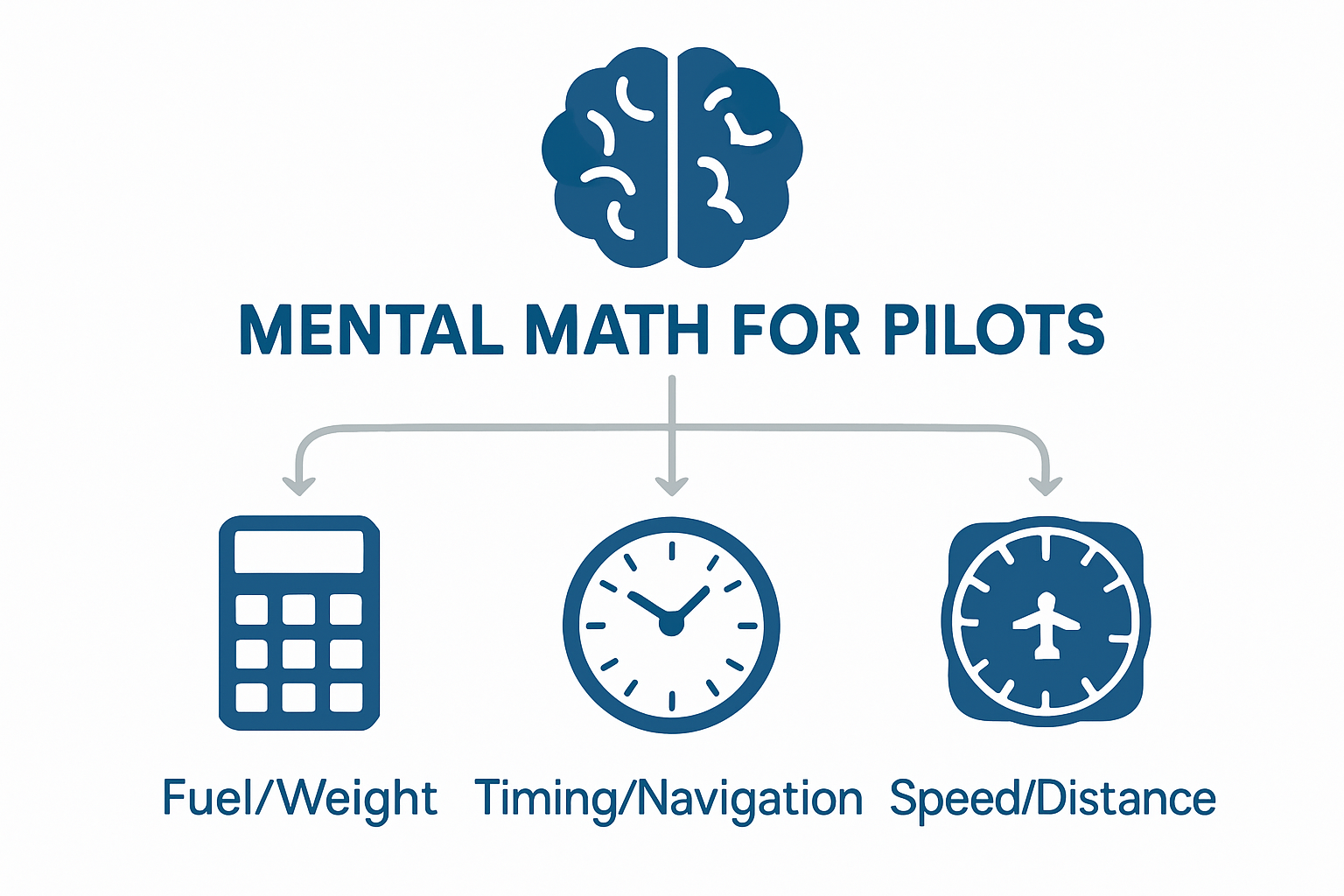
In practical aviation contexts, mental math skills manifest across multiple critical domains. Pilots routinely calculate precise fuel requirements, determine aircraft weight and balance, estimate navigation times, convert between imperial and metric measurements, and rapidly assess meteorological data impact on flight parameters. These calculations often occur simultaneously with other complex tasks, requiring exceptional cognitive multitasking abilities. Mental math is not merely about speed but about maintaining situational awareness and making split-second decisions that can significantly influence flight safety and operational success.
Beyond regulatory requirements, mental math represents a professional differentiator for pilots. Those who excel in rapid mathematical reasoning demonstrate superior cognitive flexibility, analytical thinking, and stress management skills. By developing robust mental arithmetic capabilities, pilots enhance their professional competence and contribute to creating a safer, more efficient aviation environment.
Essential Calculations Pilots Must Master
Pilots must master a diverse range of mathematical calculations that are critical to flight safety and operational efficiency. Flight performance calculations encompass multiple complex domains requiring precise mental arithmetic and rapid cognitive processing. These essential calculations span several key operational areas, each demanding exceptional mathematical precision and situational awareness.

According to EASA training regulations, Private Pilot Licence (PPL) applicants must demonstrate proficiency in several critical calculation domains. Power settings, take-off performance, approach calculations, and landing performance represent core competencies that pilots must consistently execute during pre-flight preparation. These calculations involve determining precise aircraft parameters such as thrust requirements, optimal speeds, weight distributions, and potential runway performance limitations.
The essential calculations pilots must consistently master include:
-
Fuel Calculations
- Total fuel required for entire journey
- Fuel consumption rates per hour
- Reserve fuel contingencies
- Alternative route fuel requirements
-
Weight and Balance Computations
- Aircraft gross weight
- Centre of gravity positioning
- Payload distribution
- Cargo and passenger load management
-
Navigation Mathematics
- Distance calculations
- Ground speed estimations
- Wind correction angles
- Fuel consumption per nautical mile
- Time and fuel remaining projections
Critical safety-sensitive calculations demand absolute precision. EASA safety promotion materials emphasise the high-stakes nature of performance data calculations, particularly regarding take-off distance, thrust settings, airspeed, and aircraft trim. Even minor computational errors can significantly impact flight safety, making mental math an indispensable skill for professional pilots. The ability to perform these calculations swiftly and accurately under pressure separates competent pilots from exceptional aviators.
Real-Time Cockpit Application Techniques
Mental math in the cockpit requires more than mathematical skill—it demands strategic cognitive techniques that enable pilots to perform precise calculations under intense operational pressures. Crew resource management principles play a crucial role in developing systematic approaches to real-time mathematical problem solving during flight operations.
EASA safety guidelines emphasise deliberate and methodical calculation approaches that help mitigate computational errors under time constraints. Professional pilots employ several strategic techniques to maintain mathematical accuracy:
-
Systematic Verification Techniques
- Cross-checking calculations with co-pilot
- Using multiple calculation methods
- Breaking complex calculations into smaller steps
- Implementing redundant verification processes
-
Cognitive Load Management
- Prioritising critical calculations
- Creating mental estimation frameworks
- Developing rapid approximation skills
- Maintaining calm under pressure
-
Technology Integration Strategies
- Using flight management systems strategically
- Understanding technological calculation limitations
- Manually verifying computerised calculations
- Developing backup manual calculation skills
Successful cockpit mathematics require more than technical skill—they demand psychological resilience. Pilots must maintain exceptional situational awareness while performing complex calculations, balancing computational accuracy with broader operational demands. The ability to perform mental calculations swiftly, accurately, and confidently separates competent pilots from exceptional aviation professionals.
Training Strategies for Mental Calculation Skills
Developing exceptional mental calculation skills requires a structured, systematic approach tailored specifically to aviation’s unique cognitive demands. Study techniques for pilot training play a critical role in transforming mathematical abilities from basic arithmetic to advanced operational computation skills necessary for professional aviation environments.
EASA’s competency-based theoretical knowledge courses integrate mental maths testing through comprehensive assessment strategies designed to develop pilots’ calculation proficiencies. These training approaches focus on several key developmental methodologies:
-
Cognitive Skill Development
- Progressive complexity training
- Stress simulation exercises
- Multitasking calculation scenarios
- Rapid mental processing drills
-
Structured Learning Techniques
- Systematic error analysis
- Pattern recognition training
- Computational speed enhancement
- Precision-focused practice modules
-
Practical Application Strategies
- Simulated flight scenario calculations
- Real-world problem-solving exercises
- Collaborative calculation techniques
- Technology-assisted skill development
Successful mental calculation training transcends traditional mathematical instruction. It demands a holistic approach that integrates psychological resilience, technological understanding, and precise computational skills. Pilots must develop not just mathematical accuracy, but the ability to perform complex calculations seamlessly under varying operational pressures, transforming mental arithmetic from a technical skill into a critical safety competency.
Common Errors and How to Avoid Them
Mental calculation errors in aviation represent potentially catastrophic risks that demand meticulous prevention strategies. Understanding human factors in aviation provides critical insights into the psychological mechanisms underlying computational mistakes during high-stress flight operations.
EASA safety promotion materials highlight systematic approaches to preventing performance data errors, identifying several key computational pitfalls pilots must consciously mitigate:
-
Cognitive Distortion Errors
- Rushing calculations under time pressure
- Overlooking decimal point placement
- Misinterpreting complex numerical sequences
- Experiencing computational fatigue
-
Verification Failure Modes
- Insufficient cross-checking procedures
- Neglecting redundant calculation methods
- Over-relying on technological calculation aids
- Failing to challenge potentially incorrect results
-
Psychological Interference Factors
- Emotional stress compromising concentration
- Confirmation bias in result interpretation
- Reduced situational awareness during calculations
- Performance anxiety affecting computational accuracy
Mental math excellence in aviation requires more than technical skill—it demands psychological resilience, systematic verification processes, and a disciplined approach to computational thinking. Pilots must develop not just mathematical proficiency, but a holistic cognitive strategy that transforms potential errors into opportunities for enhanced operational precision.
Enhance Your Mental Math Skills with Expert Aviation Training
Mastering mental arithmetic is essential for every pilot striving to maintain accuracy and safety under pressure. This article highlights the challenges pilots face when performing rapid calculations related to fuel, weight and balance, and navigation. If you want to sharpen your cognitive skills and excel in these critical areas, discovering proven training methods is key. VictorOne’s Academy – VictorOne offers comprehensive EASA-approved courses designed to build your mental calculation abilities alongside broader theoretical knowledge.

Take control of your pilot training journey today by joining VictorOne’s flexible online platform. Access interactive materials, expert consultations, and exclusive resources that will empower your confidence in cockpit calculations and decision-making. Visit VictorOne to explore how you can transform mental maths challenges into your greatest professional asset. Begin your path to safer, smarter flying now.
Frequently Asked Questions
What is mental math and why is it important for pilots?
Mental math refers to the ability to perform calculations quickly and accurately in one’s mind without the use of calculators or electronic devices. For pilots, mastering mental math is crucial for ensuring flight safety and operational efficiency, as it allows them to calculate fuel consumption, weight distributions, and navigation parameters swiftly, especially in high-pressure situations.
What calculations do pilots need to master for effective flight operations?
Pilots need to master several critical calculations, including fuel calculations (total required fuel, consumption rates), weight and balance computations (aircraft gross weight, centre of gravity), and navigation mathematics (distance, ground speed, wind correction angles). These calculations must be performed with high precision to ensure safe and efficient flight operations.
How can pilots improve their mental math skills?
Pilots can enhance their mental math skills through structured training techniques that include progressive complexity training, stress simulation exercises, and practice scenarios that involve multitasking. Additionally, systematic error analysis and computational speed drills are effective in developing proficiency.
What common errors should pilots watch out for in mental calculations?
Pilots should be aware of cognitive distortion errors, such as rushing calculations, overlooking decimals, and misinterpreting numerical sequences. Verification failures, including insufficient cross-checking and over-reliance on technology, as well as psychological factors like performance anxiety, can also lead to mistakes. Developing systematic verification processes and maintaining calm under pressure can help mitigate these errors.