Over 80 percent of aspiring british pilots report that understanding diverse aptitude test formats is their toughest early challenge. The range of requirements from different aviation authorities can quickly become confusing without clear guidance. Knowing exactly how to prepare for these tests is essential for anyone hoping to launch a successful career in aviation. With focused advice and practical steps, you can approach pilot aptitude assessments with confidence and direction.
Table of Contents
- Step 1: Assess Required Aptitude Test Formats
- Step 2: Gather Relevant Study Materials
- Step 3: Establish A Personal Study Routine
- Step 4: Simulate Real Aptitude Test Conditions
- Step 5: Evaluate Progress And Adjust Techniques
Quick Summary
| Key Point | Explanation |
|---|---|
| 1. Understand Test Formats | Familiarise yourself with various aptitude test formats required by licensing authorities and flight schools for effective preparation. |
| 2. Collect Quality Study Resources | Assemble high-quality materials such as textbooks and official publications that cover essential aviation subjects and provide practice questions. |
| 3. Create a Structured Study Routine | Design a personalised study schedule that balances theoretical and practical learning while ensuring regular engagement with the material. |
| 4. Simulate Test Conditions | Practice under real examination conditions to build confidence and improve performance, focusing on time management and mental resilience. |
| 5. Regularly Evaluate Progress | Continuously assess your learning progress and modify study techniques to address weaknesses, ensuring effective preparation for the pilot tests. |
Step 1: Assess Required Aptitude Test Formats
Understanding the various aptitude test formats is crucial for aspiring pilots preparing for their aviation career. Different licensing authorities and flight schools have specific requirements that demand careful preparation and strategic approach.
The European Aviation Safety Agency (EASA) provides comprehensive guidelines for theoretical knowledge examinations across multiple aircraft categories. These tests typically encompass multiple choice questions, covering areas such as air navigation, aircraft technical systems, flight performance, meteorology, and human performance limitations. Pilots can expect examinations to range from 30 to 120 questions depending on the specific licence category, with varying passing thresholds typically around 75% accuracy.
When preparing for these assessments, candidates should recognise that aptitude tests are not merely academic exercises but comprehensive evaluations of potential pilot capabilities. Most formats include both theoretical knowledge assessments and practical skill demonstrations, requiring a holistic preparation strategy. Professional flight schools recommend accessing past examination papers, utilising practice question banks, and developing a structured study approach that addresses both theoretical understanding and practical application.
TIP: Request sample test papers from your training institution to familiarise yourself with the exact format and question styles used in your specific pilot licensing programme.
Step 2: Gather Relevant Study Materials
Building a comprehensive study strategy requires assembling the right resources for your pilot aptitude preparation. This step involves identifying high-quality materials that cover the breadth of knowledge required for aviation examinations.
Pilot training demands a multifaceted approach to study materials. You will need textbooks covering core theoretical subjects such as air navigation, aircraft systems, meteorology, and human performance. Professional aviation training libraries recommend accessing official publications from regulatory bodies, comprehensive reference guides, and digital learning platforms that offer interactive study resources. Specific recommended materials typically include official EASA pilot training manuals, comprehensive question banks, technical reference handbooks, and online simulation tools that replicate actual examination conditions.
When selecting study materials, prioritise resources that provide detailed explanations alongside practice questions. Look for materials that offer not just theoretical knowledge but also contextual understanding of aviation principles. Some pilots find combining traditional textbooks with digital learning platforms most effective, allowing for flexible and interactive preparation. Online platforms often provide adaptive learning technologies that track your progress and highlight areas requiring additional focus.
TIP: Create a structured study schedule that allocates specific time for different resource types, ensuring you balance theoretical reading with practical question practice and mock examinations.
Step 3: Establish a Personal Study Routine
Developing an effective study routine is critical for successfully navigating pilot aptitude tests. Your approach must balance comprehensive learning with strategic time management to maximise knowledge retention and examination readiness.

The European Aviation Safety Agency regulatory guidelines suggest structured examination preparation that respects specific time constraints. Most successful pilots recommend creating a personalised study schedule that allocates dedicated time slots for different subject areas. This might involve dedicating specific weekday evenings to technical subjects like aircraft systems, weekend mornings to navigation principles, and alternate days for meteorological studies. Consistency is key your brain requires regular engagement to transform complex aviation knowledge into intuitive understanding.
When designing your study routine, incorporate varied learning techniques to maintain engagement and improve information absorption. This could include reading theoretical materials, completing practice questions, watching educational videos, and participating in online study groups. Some pilots find it beneficial to use spaced repetition techniques, which involve reviewing materials at increasing intervals to reinforce long term memory. Remember that your routine should remain flexible enough to accommodate unexpected challenges while maintaining a disciplined approach to learning.
TIP: Use digital tracking tools or a physical study journal to monitor your progress, noting areas of improvement and maintaining accountability in your pilot training journey.
Step 4: Simulate Real Aptitude Test Conditions
Mastering pilot aptitude tests requires more than just theoretical knowledge you must develop the mental resilience and strategic approach needed to perform under examination pressure. Simulating actual test conditions is crucial for building confidence and improving your overall performance.
EASA regulatory specifications provide valuable insights into the precise examination formats that should guide your practice sessions. This means recreating test environments that mirror official examination conditions as closely as possible. Set up a dedicated study space that mimics test centre constraints: use a plain desk, remove all unnecessary materials, and practice with strict time limitations. Invest in a reliable timer and practice answering questions within the exact time constraints specified for each section of the examination.
Effective simulation involves more than physical setup. Train yourself to manage mental stress by practising under progressively challenging conditions. Start with shorter timed sessions and gradually increase the duration and complexity. Use practice papers that replicate the exact question styles and difficulty levels of official pilot aptitude tests. Some candidates find it helpful to wear noise cancelling headphones or practice in environments with controlled background noise to build concentration skills. Pay attention to your physiological responses during these mock examinations track your heart rate, breathing, and stress levels to develop better emotional regulation techniques.
TIP: Record your mock examination performance metrics including completion time, accuracy rates, and areas of difficulty. This data will help you refine your preparation strategy and identify specific areas requiring additional focus.
Step 5: Evaluate Progress and Adjust Techniques
Successful pilot aptitude test preparation requires continuous self assessment and strategic adaptation. Your ability to objectively analyse your learning progress and modify your study approach will significantly impact your examination performance.
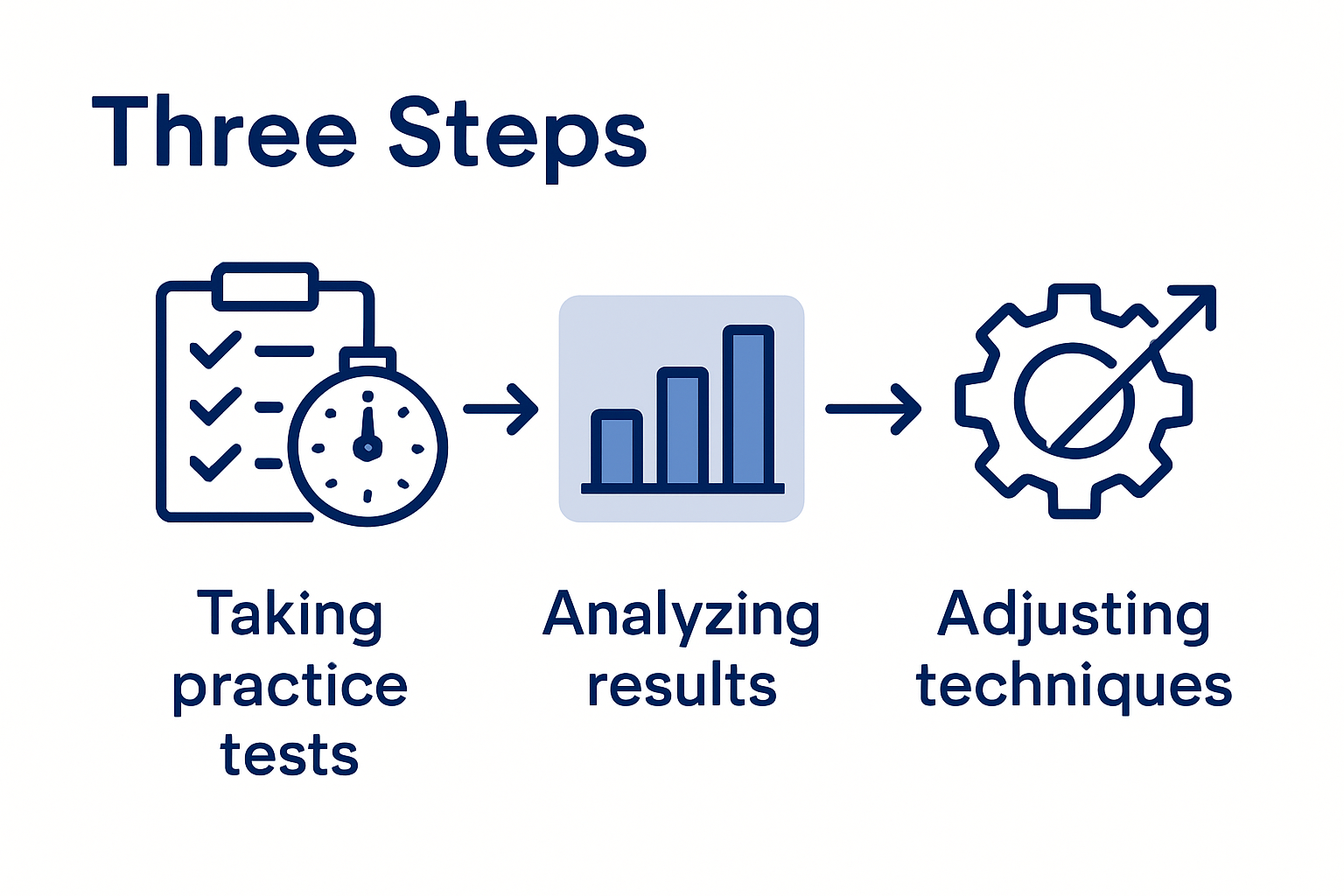
Developing a robust evaluation system involves creating comprehensive performance tracking mechanisms. Begin by establishing clear benchmark metrics such as practice test scores, time management efficiency, and depth of subject comprehension. Regularly review your mock examination results, identifying consistent patterns in areas of strength and weakness. Some candidates find it beneficial to create visual progress charts that map their performance across different subject domains, allowing for a clear understanding of knowledge progression and targeted improvement strategies.
The most effective learning approaches are dynamic and responsive. When you notice recurring challenges in specific topics, do not simply repeat the same study methods. Instead, experiment with alternative learning techniques such as audio recordings, collaborative study groups, visual mind mapping, or interactive online resources. Pay close attention to your learning style personal reflection is key to understanding how you absorb and retain complex aviation knowledge. Consider seeking feedback from experienced pilots or professional instructors who can provide external perspectives on your preparation strategy.
TIP: Implement a quarterly review process where you comprehensively assess your study progress, celebrate improvements, and recalibrate your learning approach to maintain continuous momentum towards your pilot certification goals.
Take Control of Your Pilot Aptitude Test Preparation Today
Preparing for pilot aptitude tests can feel overwhelming as you juggle complex subjects like air navigation, meteorology, and human performance under strict time constraints. The guide highlights key challenges such as establishing a disciplined study routine, simulating real exam conditions, and adapting your learning techniques to overcome weaknesses. These hurdles demand a flexible and comprehensive training approach that fully supports your journey towards EASA pilot certification.

VictorOne.eu offers expertly designed online theoretical courses tailored to meet these exact needs. With EASA-approved ATPL(A) and helicopter licensing modules, interactive question banks, and detailed progress tracking tools, our platform empowers you to study anywhere at your own pace. Benefit from online consultations and exam registration support that streamline your preparation process. Don’t let uncertainty slow your ambition to become a professional pilot. Visit VictorOne.eu now to access all essential resources and start turning your pilot aptitude goals into achievements.
Frequently Asked Questions
What formats do aptitude tests for pilots typically include?
Different aptitude tests for pilots may include multiple choice questions and practical skill demonstrations. Familiarise yourself with past exam papers and practice question banks to understand the specific formats used in your licensing programme.
How can I gather relevant study materials for pilot aptitude tests?
To prepare effectively, start by assembling a diverse range of study materials such as textbooks, official training manuals, and digital learning platforms. Prioritise resources that offer both theoretical knowledge and practice questions to enhance your understanding.
What should my personal study routine for pilot aptitude tests look like?
Create a structured study routine that allocates specific time for different topics, balancing theoretical reading with practical question practice. For instance, dedicate weekday evenings to technical subjects and weekends to navigation principles to reinforce your learning.
How can I simulate real aptitude test conditions effectively?
To simulate real examination conditions, set up a dedicated study space that mimics a test centre and practice answering questions under strict time limits. Gradually increase the complexity and duration of mock tests while monitoring your performance to improve your readiness.
How do I evaluate my progress when preparing for pilot aptitude tests?
Regularly assess your progress by tracking practice test scores and identifying strengths and weaknesses. Use visual progress charts or benchmarking metrics to adapt your study techniques and focus on areas requiring more attention.
What techniques can I use to adjust my study methods if I’m struggling?
Experiment with different learning techniques such as audio recordings or visual mind mapping if you encounter challenges. Regular reflection on your learning style will help you identify the most effective strategies for absorbing complex aviation knowledge.