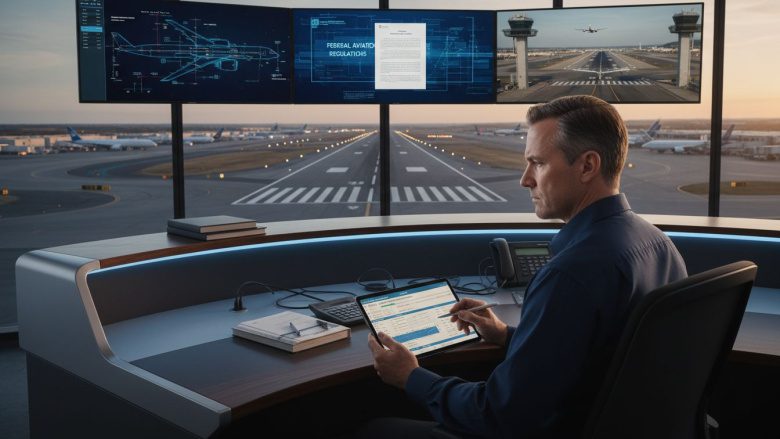
British aviation schools have reported a surge in demand for Virtual Reality systems, with over 60 percent of their aspiring pilots using immersive simulators to refine complex manoeuvres. For those in Central Europe aiming for EASA-approved training, this innovation is no longer limited to big-budget airlines. The rise of advanced VR environments means you can practise emergency landings or master adverse weather handling in a safe, controlled space. Discover how these technologies are opening a new era of precision and confidence for pilots across Europe.
Table of Contents
- Defining Virtual Reality In Modern Aviation
- Types Of VR Flight Simulators And Environments
- How VR Integrates With EASA Training Standards
- Key Benefits For Pilot Skills And Safety
- Limitations, Risks, And Cost Considerations
Key Takeaways
| Point | Details |
|---|---|
| Transformative Training Tool | Virtual Reality enhances aviation training by creating immersive, risk-free environments for high-risk scenarios. |
| Variety of Simulator Types | Different VR flight simulators, from desktop to full-motion systems, cater to various training objectives and skill levels. |
| Compliance with EASA Standards | Integration of VR into training protocols aligns with EASA standards, ensuring safety and performance benchmarks are maintained. |
| Considerations for Implementation | While VR offers significant benefits, institutions must evaluate initial costs, technological constraints, and potential training quality challenges. |
Defining Virtual Reality in Modern Aviation
Virtual Reality (VR) represents a transformative technological paradigm in aviation training, offering immersive three-dimensional environments that fundamentally reshape how pilots learn and practise complex flight scenarios. According to EASA’s official documentation, VR is defined as a computer-generated three-dimensional environment enabling exploration and interaction, distinctly different from traditional training mock-ups or augmented reality platforms.
In the context of aviation, VR transcends traditional simulation by creating hyper-realistic scenarios that replicate intricate flight conditions with unprecedented precision. These digital environments allow pilots to experience high-risk training scenarios without physical danger, such as emergency landings, extreme weather conditions, and complex mechanical failures. EASA’s press release on VR-based flight simulation highlights the technology’s ability to simulate critical manoeuvres like autorotation and hovering, which are challenging to reproduce in traditional training settings.
The technological architecture of aviation VR systems involves sophisticated hardware and software components designed to create seamless, responsive experiences. These systems typically include:
- High-resolution head-mounted displays
- Motion tracking sensors
- Realistic cockpit replica controllers
- Advanced physics-based simulation engines
By integrating these elements, VR training platforms provide aspiring pilots with an interactive learning environment that bridges theoretical knowledge and practical skill development.
Pro Tip: Research Advanced Training Approach: Investigate VR training programmes that offer comprehensive scenarios covering multiple aircraft types and complex flight conditions to maximise your learning potential.
Types of VR Flight Simulators and Environments
Virtual Reality flight simulators represent a sophisticated spectrum of training environments, ranging from basic desktop configurations to highly advanced full-motion platforms. According to EASA’s detailed documentation on Flight Simulation Training Devices, these simulators can be categorised into several distinct technological tiers, each offering progressively immersive training experiences.
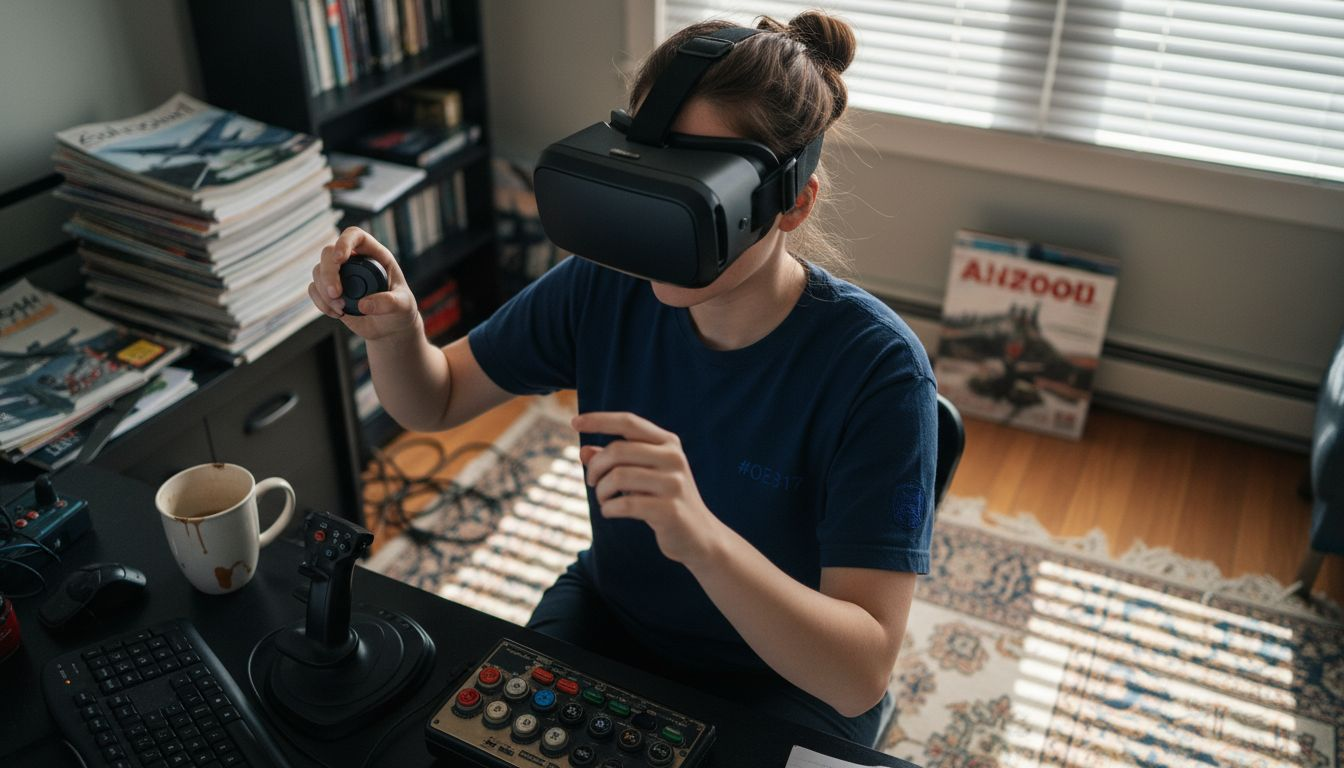
The primary categories of VR flight simulators include desktop-based simulators, head-mounted display (HMD) systems, and full-motion integrated environments. Desktop-based simulators provide entry-level training through computer screens, while HMD systems offer more immersive experiences by creating 360-degree visual environments. Full-motion integrated environments represent the pinnacle of VR training, incorporating motion platforms that simulate actual aircraft movements. EASA’s press release on VR-based flight simulation highlights the potential of these advanced systems, particularly in rotorcraft training scenarios.
Each VR simulator type offers unique training advantages:
-
Desktop Simulators
- Low-cost entry point
- Basic procedural training
- Limited sensory feedback
-
Head-Mounted Display Systems
- Immersive 360-degree environments
- Enhanced spatial awareness
- Precise motion and interaction tracking
-
Full-Motion Integrated Environments
- Physical motion simulation
- Comprehensive sensory experiences
- High-fidelity scenario replication
The technological sophistication of these simulators continues to evolve, with emerging innovations focusing on increased realism, more nuanced sensory feedback, and improved physiological response modelling.
The following table summarises how different VR flight simulator types align with various training objectives:
| Simulator Type | Best Suited For | Limitations Noted |
|---|---|---|
| Desktop-based | Theoretical procedures | Limited immersion |
| Head-mounted display (HMD) | Manoeuvre rehearsal | Less tactile feedback |
| Full-motion integrated | Complex scenario realism | High initial investment |
Pro Tip: Strategic Simulator Selection: Choose VR flight training platforms that offer progressive complexity, allowing you to advance through different simulator types as your skills develop.
How VR Integrates with EASA Training Standards
The integration of Virtual Reality with European Aviation Safety Agency (EASA) training standards represents a sophisticated regulatory adaptation to emerging technological innovations. EASA’s comprehensive approach to qualifying VR-based Flight Simulation Training Devices demonstrates a strategic framework for incorporating cutting-edge training technologies while maintaining rigorous safety and performance benchmarks.
The regulatory integration process involves several critical components. Certification specifications have been methodically adjusted to accommodate VR technologies, ensuring that new simulation platforms meet the same exacting standards as traditional training environments. This involves detailed assessment protocols that evaluate multiple dimensions of VR training, including visual fidelity, procedural accuracy, physiological response modelling, and comprehensive skill transfer potential.
Key aspects of EASA’s VR integration framework include:
-
Technical Compliance
- Detailed hardware specification reviews
- Software performance validation
- Comprehensive safety assessment protocols
-
Training Effectiveness Evaluation
- Comparative skill acquisition metrics
- Scenario complexity analysis
- Psychological and physiological response tracking
-
Standardisation Requirements
- Consistent simulation environment design
- Interoperability between different VR platforms
- Uniform performance assessment criteria
The regulatory approach demonstrates EASA’s commitment to balancing technological innovation with stringent safety standards, ensuring that emerging training methodologies meet the highest professional requirements for aviation training.
Pro Tip: Regulatory Navigation: Stay informed about the latest EASA guidelines on VR training technologies by regularly reviewing official publications and participating in professional development seminars.
Key Benefits for Pilot Skills and Safety
Virtual Reality training represents a transformative approach to enhancing pilot skills and safety, offering unprecedented opportunities for immersive and risk-free learning environments. EASA’s comprehensive analysis of VR flight simulation technologies highlights the critical advantages of implementing advanced simulation techniques that enable pilots to practise complex manoeuvres without real-world operational risks.
The skill development potential of VR technologies extends far beyond traditional training methodologies. Pilots can now repeatedly practise high-risk scenarios such as emergency landings, extreme weather navigation, and critical mechanical failure responses in a controlled, predictable environment. This repetitive, consequence-free training approach allows for nuanced skill refinement that would be impossible or prohibitively dangerous in actual aircraft, dramatically reducing the learning curve and potential safety risks associated with initial pilot training.
Key benefits of VR pilot training include:
-
Enhanced Safety Preparation
- Realistic emergency scenario simulation
- Risk-free complex manoeuvre practice
- Psychological stress management training
-
Skill Acquisition Acceleration
- Immediate performance feedback
- Unlimited scenario repetition
- Precise skill measurement and tracking
-
Cost-Effective Training
- Reduced physical equipment requirements
- Minimised fuel and maintenance expenses
- Scalable training infrastructure
Moreover, immersive technologies provide a comprehensive training approach that addresses multiple learning dimensions simultaneously, integrating visual, auditory, and kinaesthetic learning experiences that traditional methods cannot replicate.
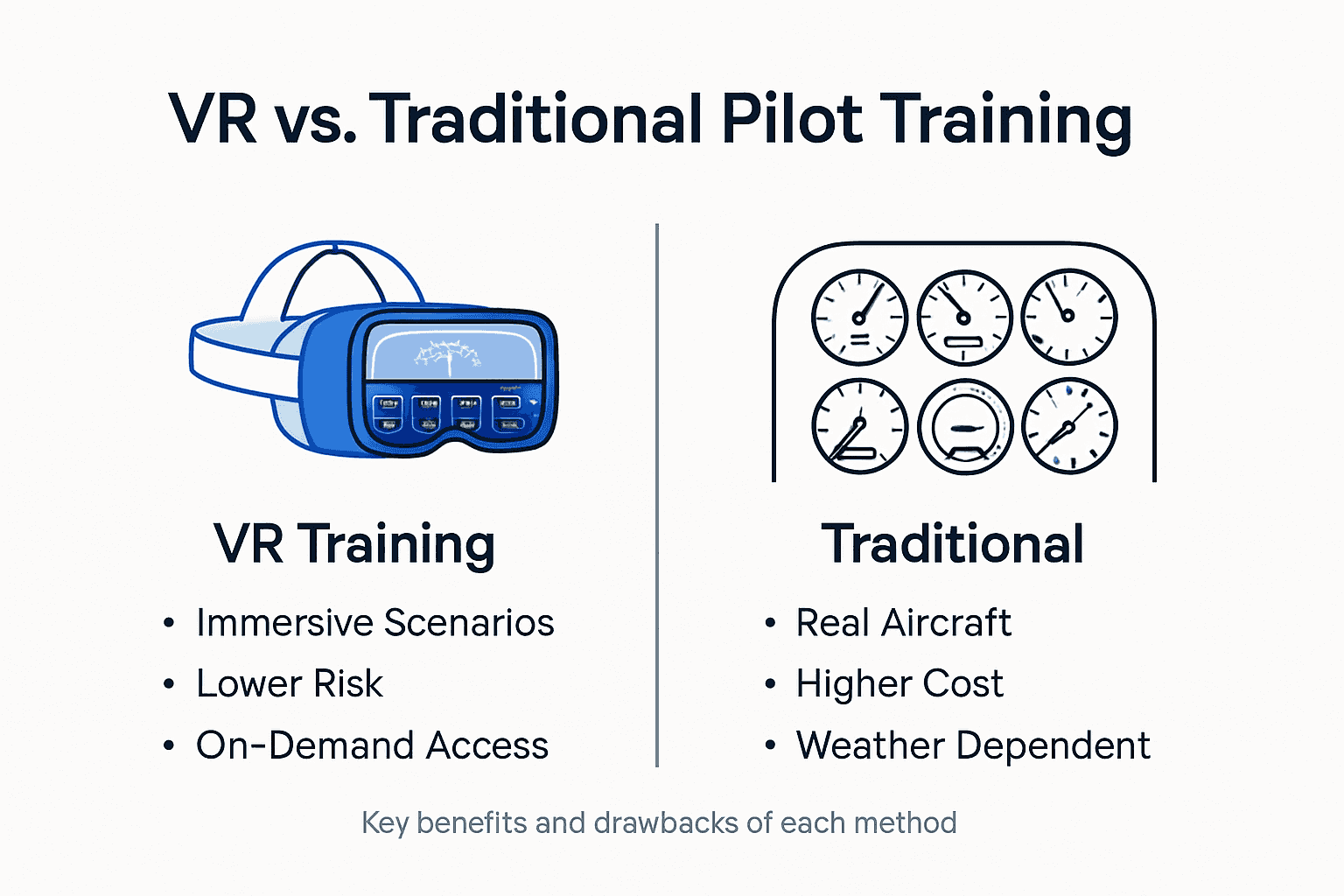
Here is an overview comparing the key advantages and shortcomings of VR and traditional flight training methods:
| Aspect | VR Training Strength | Traditional Training Limitation |
|---|---|---|
| Safety | Risk-free scenario practice | Real-world risks present |
| Cost Efficiency | Lower operational expenses | High fuel and maintenance costs |
| Realism | Digital high-fidelity environments | Limited complex event simulation |
| Skill Transferability | Convenient feedback and repetition | Slower feedback loop |
Pro Tip: Strategic Skill Development: Approach VR training as a complementary tool, not a replacement for traditional methods, and actively seek diverse simulation scenarios to maximise your learning potential.
Limitations, Risks, and Cost Considerations
While Virtual Reality represents a promising technological advancement in pilot training, it is not without significant challenges and potential limitations. EASA’s comprehensive analysis of immersive technologies highlights critical considerations that must be carefully evaluated by aviation training institutions and aspiring pilots.
The primary technological constraints of VR training encompass multiple complex dimensions. Simulator fidelity remains a critical challenge, with current technologies struggling to perfectly replicate the nuanced sensory experiences of actual flight environments. Physiological responses such as simulator sickness can emerge from prolonged VR exposure, potentially compromising training effectiveness and creating unexpected psychological barriers for pilot trainees.
Key limitations and risks include:
-
Technological Constraints
- Limited sensory replication accuracy
- Potential motion sickness effects
- Hardware performance variability
-
Financial Considerations
- High initial infrastructure investment
- Ongoing software and hardware maintenance
- Complex regulatory compliance requirements
-
Training Quality Challenges
- Incomplete skill transferability
- Reduced tactile feedback
- Potential over-reliance on digital environments
The economic landscape of VR pilot training presents a nuanced investment scenario. While initial implementation costs remain substantial, long-term efficiency gains and reduced operational expenses can offset these substantial upfront investments. Comprehensive cost-benefit analyses are essential for institutions considering VR integration into their training programmes.
Pro Tip: Strategic Technology Assessment: Conduct thorough pilot testing and comparative performance evaluations before making significant VR training infrastructure investments to ensure meaningful skill development and return on investment.
Elevate Your Pilot Training with Flexible, EASA-Approved Theory Courses
Virtual Reality in aviation training offers thrilling opportunities to master complex scenarios safely but mastering the theoretical foundations remains essential for ultimate success. If you are aiming to excel in pilot skills and comply with rigorous EASA standards this is the moment to strengthen your aviation knowledge through professional online education. At VictorOne Academy we provide comprehensive EASA-approved courses including ATPL(A), ATPL(H)/IR and ICAO English proficiency to prepare you thoroughly for your pilot licensing journey.
Join thousands of aspiring pilots worldwide who benefit from high-quality theory training combined with flexible study options. Whether you dream of flying fixed-wing aircraft or helicopters, our platform supports your progression with carefully designed materials interactive question banks and expert online consultations. Take control of your career development today by visiting VictorOne.eu and explore how our aviation education solutions bridge the gap between innovative VR training environments and solid theoretical mastery. Discover courses tailored to your needs and start building your pilot future now by checking out Aircraft – VictorOne and our dedicated Academy – VictorOne pages.
Frequently Asked Questions
What is Virtual Reality (VR) in aviation training?
Virtual Reality in aviation training refers to the use of immersive three-dimensional environments to enhance pilot skills and safety. It allows pilots to practise complex scenarios without physical risks, utilising computer-generated simulations that closely replicate flight conditions.
How do different types of VR flight simulators compare?
VR flight simulators can be categorised into three main types: desktop-based simulators for basic training, head-mounted display (HMD) systems for immersive experiences, and full-motion integrated environments that simulate actual aircraft movements. Each type varies in cost, sensory feedback, and complexity of training scenarios.
What are the benefits of using VR for pilot training?
The benefits of VR for pilot training include enhanced safety preparation through risk-free scenario simulations, accelerated skill acquisition due to immediate performance feedback, and cost-effective training by reducing physical equipment needs and fuel expenses.
What limitations should I be aware of when using VR in aviation training?
Key limitations of VR in aviation training include potential simulator sickness, challenges in accurately replicating sensory experiences, and high initial investment costs for infrastructure. Additionally, there may be concerns regarding incomplete skill transferability and reduced tactile feedback during training.