More than 12000 new private pilot licences are issued in the European Union every year, with many british applicants eager to take to the skies. For aspiring aviators, understanding each step of the licensing journey is crucial to achieving their dream. This guide uncovers the essential requirements, insider tips, and official pathways every british candidate needs to navigate the process smoothly and start flying confidently.
Table of Contents
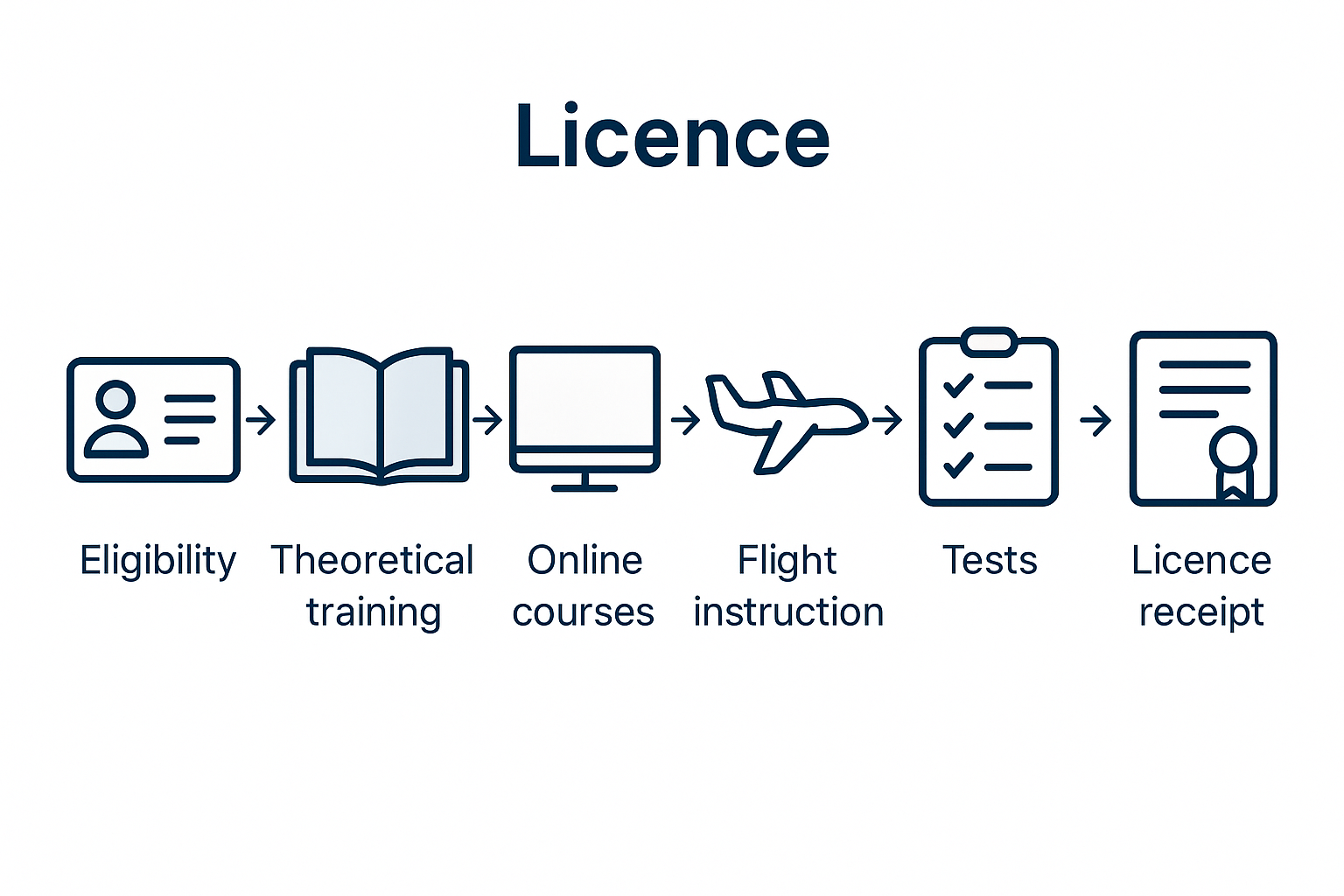
- Step 1: Assess Eligibility Requirements
- Step 2: Register For Approved Theoretical Training
- Step 3: Complete Online Coursework And Consultation
- Step 4: Undertake Practical Flight Instruction
- Step 5: Pass Examinations And Flight Tests
- Step 6: Secure Your Private Pilot Licence
Quick Summary
| Key Point | Explanation |
|---|---|
| 1. Meet Age Requirement | You must be at least 17 years old to obtain your Private Pilot Licence, ensuring maturity for aviation responsibilities. |
| 2. Obtain Medical Certification | A valid Class 2 medical certificate is essential, requiring a medical examination that assesses fitness for flying. |
| 3. Choose Approved Training Organisation | Enrol in training at an EASA-recognised Approved Training Organisation to receive standardised and high-quality instruction. |
| 4. Complete Theoretical and Practical Training | Approximately 100 hours of theoretical training and 45 hours of practical flight instruction are necessary to build your aviation skills. |
| 5. Pass Required Examinations | Successfully passing theoretical exams and a practical flight test is crucial to obtaining your Private Pilot Licence. |
Step 1: Assess eligibility requirements
Before soaring through the skies as a private pilot, understanding the eligibility requirements is your critical first milestone. The European Union sets clear standards for aspiring pilots, ensuring safety and professional competence from the very beginning.
To start your aviation journey, you must meet several key prerequisites established by the European Union Aviation Safety Agency (EASA). First and foremost, age is a fundamental factor – you must be at least 17 years old to obtain your Private Pilot Licence (PPL). This age requirement ensures that candidates have sufficient maturity and cognitive development for the responsibilities of piloting an aircraft.
Medical fitness is another crucial component of your eligibility. You will need to acquire a valid Class 2 medical certificate, which involves a comprehensive medical examination. This assessment checks your physical and mental capabilities, including vision standards and overall health. Colour vision is particularly important, especially if you plan to add night or instrument ratings to your licence.
TIP: Book your medical examination with an authorised aviation medical examiner well in advance of starting your flight training. Some medical conditions might require additional documentation or specialist assessments.
Lastly, you must train at an Approved Training Organisation (ATO) or Declared Training Organisation (DTO) recognised by EASA. These institutions ensure you receive standardised, high quality training that meets all regulatory requirements. Your next step will be researching and selecting the right training organisation that fits your learning style and career aspirations.
Step 2: Register for approved theoretical training
Navigating the landscape of pilot training begins with registering for an approved theoretical course that meets European Aviation Safety Agency (EASA) standards. Your theoretical training is a fundamental component of becoming a professional pilot, encompassing essential knowledge that will form the backbone of your aviation career.
Theoretical knowledge training is a structured programme designed to prepare you comprehensively for your Private Pilot Licence. According to EASA regulations, this training typically involves approximately 100 hours of theory instruction, which covers critical areas such as aerodynamics, navigation, meteorology, aircraft systems, and flight regulations. The key is selecting an Approved Training Organisation (ATO) or Declared Training Organisation (DTO) that provides a robust curriculum aligned with official aviation standards.
When choosing your theoretical training provider, consider factors beyond just course content. Look for institutions offering flexible learning options that accommodate your personal schedule and learning style. Online courses can be particularly advantageous, allowing you to study from home while maintaining the same high educational standards required by aviation authorities.
TIP: Before registering, verify that your chosen training organisation is officially recognised by EASA and can provide a comprehensive pathway from theoretical knowledge to practical flight training.
Your next step will involve completing the registration process, which typically includes submitting academic qualifications, passing initial assessments, and selecting your preferred learning format. Remember that successful theoretical training is your gateway to transforming aviation knowledge into practical piloting skills.
Step 3: Complete online coursework and consultation
Your journey towards becoming a private pilot demands comprehensive theoretical knowledge that goes far beyond simply passing exams. Online coursework represents your critical foundation for understanding the complex world of aviation.
Theoretical knowledge training encompasses nine essential subject areas mandated by European aviation authorities. These include air law, aircraft general knowledge, flight performance and planning, human performance, meteorology, navigation, operational procedures, principles of flight, and communications. Each module is meticulously designed to build your understanding systematically, ensuring you develop the comprehensive skills required for safe and professional piloting.
Online consultation and interactive learning platforms transform theoretical study from a passive experience into an engaging educational journey. Comprehensive training programmes allow you to progress at your own pace while receiving expert guidance from experienced aviation professionals. This flexible approach enables you to balance your theoretical studies with other personal and professional commitments.
TIP: Schedule regular study sessions and create a dedicated learning environment to maximise your online coursework effectiveness. Consistency is key to mastering complex aviation concepts.
As you progress through your online modules, you will be building a robust knowledge foundation that prepares you not just for examinations, but for real world flying challenges. Your next step involves translating this theoretical understanding into practical skills through structured flight training.
Step 4: Undertake practical flight instruction
Transitioning from theoretical knowledge to actual flying represents the most exhilarating phase of your pilot training journey. Practical flight instruction transforms your academic understanding into real world aviation skills through hands on experience with professional instructors.
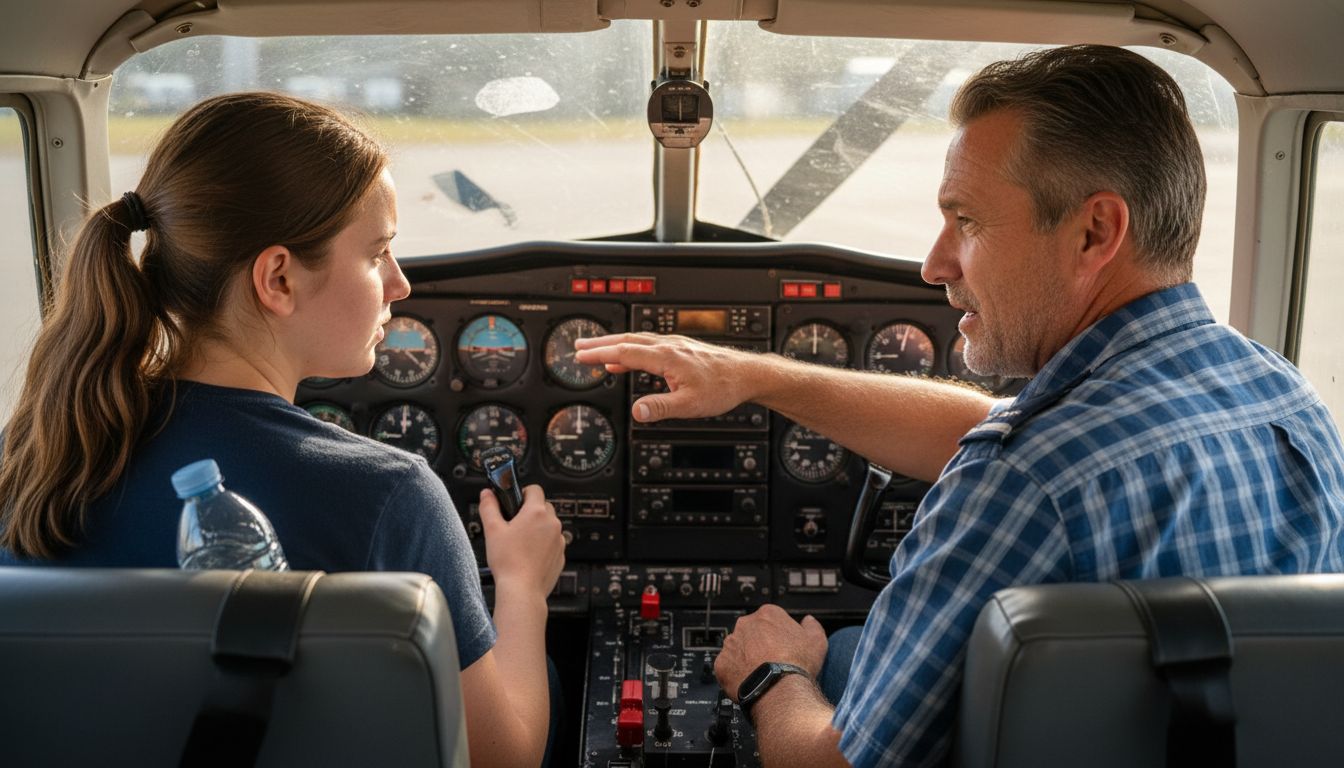
Practical flight training typically requires approximately 45 hours of structured instruction, designed to develop your fundamental flying capabilities. During these sessions, you will learn critical skills such as aircraft handling, navigation techniques, takeoff and landing procedures, and emergency management. Each flight builds upon your theoretical knowledge, converting classroom concepts into muscle memory and intuitive decision making.
Your flight training will be conducted under the guidance of certified flight instructors who will systematically progress you through various skill levels. Advanced pilot training involves progressive challenges designed to expand your competence and confidence. You will experience different weather conditions, practice communication protocols, and develop situational awareness that goes beyond simple aircraft operation.
TIP: Document every flight lesson in a detailed logbook. Recording your experiences, challenges, and instructor feedback will help track your progress and provide valuable insights for future learning.
As you accumulate flight hours and master increasingly complex manoeuvres, you will approach your final skill test with growing confidence. This comprehensive training prepares you not just for licensing examinations, but for a lifetime of safe and professional aviation.
Step 5: Pass examinations and flight tests
The culmination of your pilot training journey arrives with rigorous examinations that will test your comprehensive aviation knowledge and practical flying skills. Passing these assessments is your gateway to obtaining the coveted Private Pilot Licence.
Theoretical knowledge examinations are strategically designed to validate your understanding across multiple aviation domains. These examinations remain valid for 24 months, providing a reasonable window to complete your full licensing process. You will need to demonstrate proficiency in subjects ranging from air law and aircraft systems to navigation, meteorology, and flight performance.
The practical flight skill test represents the ultimate evaluation of your aviation capabilities. Skill tests typically last around 90 minutes and involve a comprehensive assessment conducted by a certified examiner. This test will challenge your ability to apply theoretical knowledge in real world flying scenarios, requiring precise aircraft handling, navigation skills, and critical decision making under varying conditions.
TIP: Develop a comprehensive study strategy that balances theoretical revision with practical flight preparation. Practice mock examinations and seek additional guidance from your flight instructors to identify and strengthen any potential knowledge gaps.
Successfully navigating these examinations transforms you from a student pilot to a licensed aviator. Your persistent effort, dedication, and passion will ultimately determine your success in achieving your Private Pilot Licence.
Step 6: Secure your private pilot licence
Reaching the final stage of your pilot licensing journey demands careful navigation through administrative processes and regulatory requirements. Your hard earned skills and knowledge will now transform into an official certification that opens the doors to aviation opportunities.
Licence issuance follows a structured pathway governed by national aviation authorities within the European regulatory framework. After successfully completing your theoretical and practical examinations, you must submit an official application to your local aviation authority, accompanied by documentation from your Approved Training Organisation verifying your training completion.
The licensing process involves comprehensive verification of your training records, examination results, and medical fitness. Your ATO must provide an official recommendation confirming you have met all EASA prescribed standards for obtaining a Private Pilot Licence. This recommendation serves as a critical endorsement of your aviation competence.
TIP: Maintain meticulous records of all your training documents, examination certificates, and medical assessments. Organisational precision can significantly streamline your licence application process.
Once your application is approved, you will receive your official Private Pilot Licence a tangible symbol of your dedication and achievement in the world of aviation. Your journey from aspiring pilot to licensed aviator is now complete.
Take Control of Your Pilot Training Journey with VictorOne Academy
Embarking on the path to obtaining your Private Pilot Licence involves mastering complex theory and passing rigorous exams all while managing a busy life. The article highlights common challenges such as aligning your study schedule with theoretical knowledge demands and preparing effectively for both ground school and flight tests. VictorOne understands these pressures and offers flexible EASA-approved online courses designed specifically for aspiring pilots who want to learn at their own pace from anywhere in the world.
Explore comprehensive pilot theory training through the Academy – VictorOne and gain access to interactive question banks, expert consultations and certification pathways that keep you motivated and focused. Whether you are just beginning your flight study or advancing towards commercial aviation, VictorOne provides a proven digital platform that fits your schedule. Start your aviation education today at VictorOne.eu and take the next step towards turning your dream of becoming a private pilot into reality.
You can also deepen your understanding of aircraft systems with resources in our Aircraft – VictorOne category to complement your theoretical knowledge and ensure well-rounded preparation.
Frequently Asked Questions
What are the eligibility requirements for obtaining a Private Pilot Licence?
To obtain a Private Pilot Licence, you must be at least 17 years old, hold a valid Class 2 medical certificate, and train at an Approved Training Organisation or Declared Training Organisation. Ensure you meet these prerequisites before commencing your training.
How long does the theoretical training take for a Private Pilot Licence?
The theoretical training for a Private Pilot Licence typically involves around 100 hours of instruction. Register for an approved course to start your training and gain essential aviation knowledge within a structured timeframe.
What subjects are covered in the theoretical knowledge training?
Theoretical knowledge training covers nine essential subjects, including air law, aircraft general knowledge, navigation, meteorology, and flight performance. Focus on mastering these areas to build a solid foundation for your practical flight training.
How many hours of practical flight instruction do I need?
You will require approximately 45 hours of structured flight instruction to develop your flying capabilities. Begin practical training soon after completing theoretical courses to ensure a continuous learning experience.
What steps should I take to prepare for the examinations for my Private Pilot Licence?
To prepare for the examinations, develop a comprehensive study strategy that balances theoretical revision with practical flight preparation. Retain a study schedule and practice mock examinations to reinforce your knowledge and skills.
How do I apply for my Private Pilot Licence after passing the required examinations?
After passing your examinations, you must submit an official application to your local aviation authority, along with documentation from your training organisation verifying your training completion. Keep records of all required documents to streamline the application process.
Recommended
- How Can One Become a Pilot: A Step-by-Step Guide – VictorOne
- Master Accelerated Pilot Programs for Fast-Track Licensing – VictorOne
- Understanding Aviation Career Pathways for Aspiring Pilots – VictorOne
- Complete Guide to Reasons to Become a Pilot – VictorOne
- How to Get Your SIA Licence in 2025: Step-by-Step Guide|BM