Surprisingly, more than half of student pilots misinterpret airspace classifications during their first year of study. For those pursuing EASA-approved training in Central Europe, mastering these distinctions is a cornerstone for both ATPL success and real-world aviation safety. Whether comparing british regulations or tackling common misconceptions, understanding the layers of control, communication, and legal obligations in each airspace class will help you fly smarter and avoid costly mistakes.
Table of Contents
- Defining Airspace Classes And Common Misconceptions
- Easa Airspace Classification System Explained
- Differences Between Controlled And Uncontrolled Airspace
- Pilot Requirements And Responsibilities By Airspace Class
- Legal Implications And Common Pitfalls For Students
Key Takeaways
| Point | Details |
|---|---|
| Understanding Airspace Classes | Pilots must grasp the nuances of airspace classes A to G to ensure safety and compliance during flights. |
| Controlled vs Uncontrolled Airspace | Recognising the differences between controlled and uncontrolled airspace is vital for maintaining proper communication and separation protocols. |
| Pilot Requirements | Each airspace class imposes distinct responsibilities, from continuous communication in controlled airspace to self-management in uncontrolled zones. |
| Legal Implications | Awareness of the legal consequences of airspace infringements is crucial for aspiring pilots to avoid severe regulatory repercussions. |
Defining Airspace Classes and Common Misconceptions
Pilots navigating the complex world of aviation must understand airspace classifications, which are far more nuanced than many initially realise. The International Civil Aviation Organisation (ICAO) airspace system provides a structured framework defining seven distinct airspace classes: A through G, each with specific rules, services, and operational requirements.
Understanding these classes is critical because pilots cannot assume uniform protection or traffic management across different airspace types. Airspace Classes range from highly controlled environments like Class A, which exclusively permits instrument flight rules (IFR) traffic, to more relaxed zones like Class G, where visual flight rules (VFR) aircraft might encounter minimal air traffic control oversight. Many pilots mistakenly believe all airspaces offer equivalent levels of separation and guidance, which can lead to potentially dangerous misunderstandings.
Each airspace class has unique characteristics determining pilot responsibilities, communication requirements, and separation standards. For instance, IFALPA’s briefing highlights that Classes B, C, and D provide progressively reduced air traffic control services compared to Class A. Class E, which covers substantial portions of global airspace, offers different services to IFR and VFR aircraft, a nuance many pilots overlook. Understanding these distinctions is not just academic but fundamental to safe flight operations.
Pro tip: Always review the specific airspace classification before your flight and confirm the exact separation and communication protocols to ensure maximum safety and compliance.
EASA Airspace Classification System Explained
The European Union Aviation Safety Agency (EASA) implements a comprehensive airspace classification system that forms the backbone of air traffic management across European regions. European airspace classification follows the internationally recognised seven-class system, ranging from Class A to Class G, each with distinct operational requirements and service provisions.
Understanding the nuanced differences between these airspace classes is crucial for pilots operating within the European flight information regions. Controlled Airspaces (Classes A through D) mandate specific communication and separation standards, while Uncontrolled Airspaces (Classes E through G) offer varying levels of air traffic services. For instance, Class A airspace exclusively permits instrument flight rules (IFR) traffic above 19,500 feet, whereas Class G represents the most unrestricted airspace with minimal air traffic control oversight.
The European VFR airspace guidelines highlight critical distinctions in how different airspace classes manage visual and instrumental flight operations. Pilots must carefully navigate these regulations, recognising that services and separation standards change dramatically between classes. Class C airspace, commonly found around major airports, provides air traffic control services to both IFR and VFR aircraft, requiring precise communication and adherence to specific procedural requirements.
Pro tip: Always thoroughly review the specific airspace classification charts for your intended flight route and confirm the exact communication protocols and separation requirements to ensure safe and compliant navigation.
Here’s a summary of key differences between EASA airspace classes:
| Airspace Class | Communication Requirement | ATC Separation Provided | Typical Usage |
|---|---|---|---|
| Class A | Mandatory two-way radio | Full separation for IFR | High altitude, IFR only |
| Class C | Continuous radio | IFR/VFR separation | Major airports, varied traffic |
| Class E | Recommended radio | Only for IFR flights | Wide areas, mixed traffic |
| Class G | Radio optional | Minimal separation | Uncontrolled, low-level flying |
Differences Between Controlled and Uncontrolled Airspace
Understanding the fundamental distinctions between controlled and uncontrolled airspace is crucial for safe and compliant flight operations. European airspace management involves a complex system that categorises airspace based on specific operational requirements and safety protocols. Controlled airspace represents zones with comprehensive air traffic control services, whereas uncontrolled airspace demands significantly more pilot autonomy and personal responsibility.
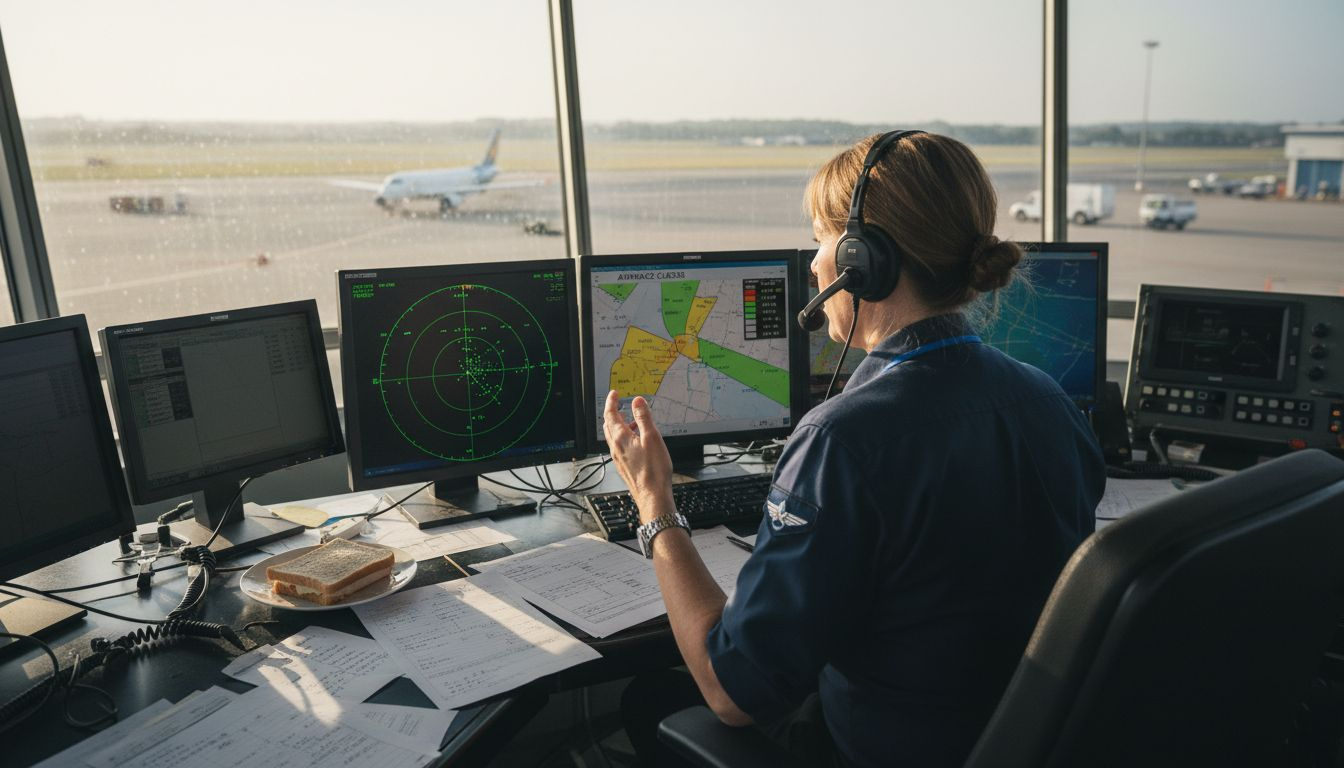
In Controlled Airspaces (Classes A through D), pilots receive direct air traffic control services with guaranteed separation from other aircraft. Air traffic controllers actively manage traffic flow, provide precise navigational instructions, and maintain strict communication protocols. Conversely, Uncontrolled Airspaces (Classes F and G) shift primary safety responsibility directly to the pilot. Pilot obligations in uncontrolled airspace require heightened situational awareness, with the fundamental principle of ‘see and avoid’ becoming the primary mechanism for collision prevention.
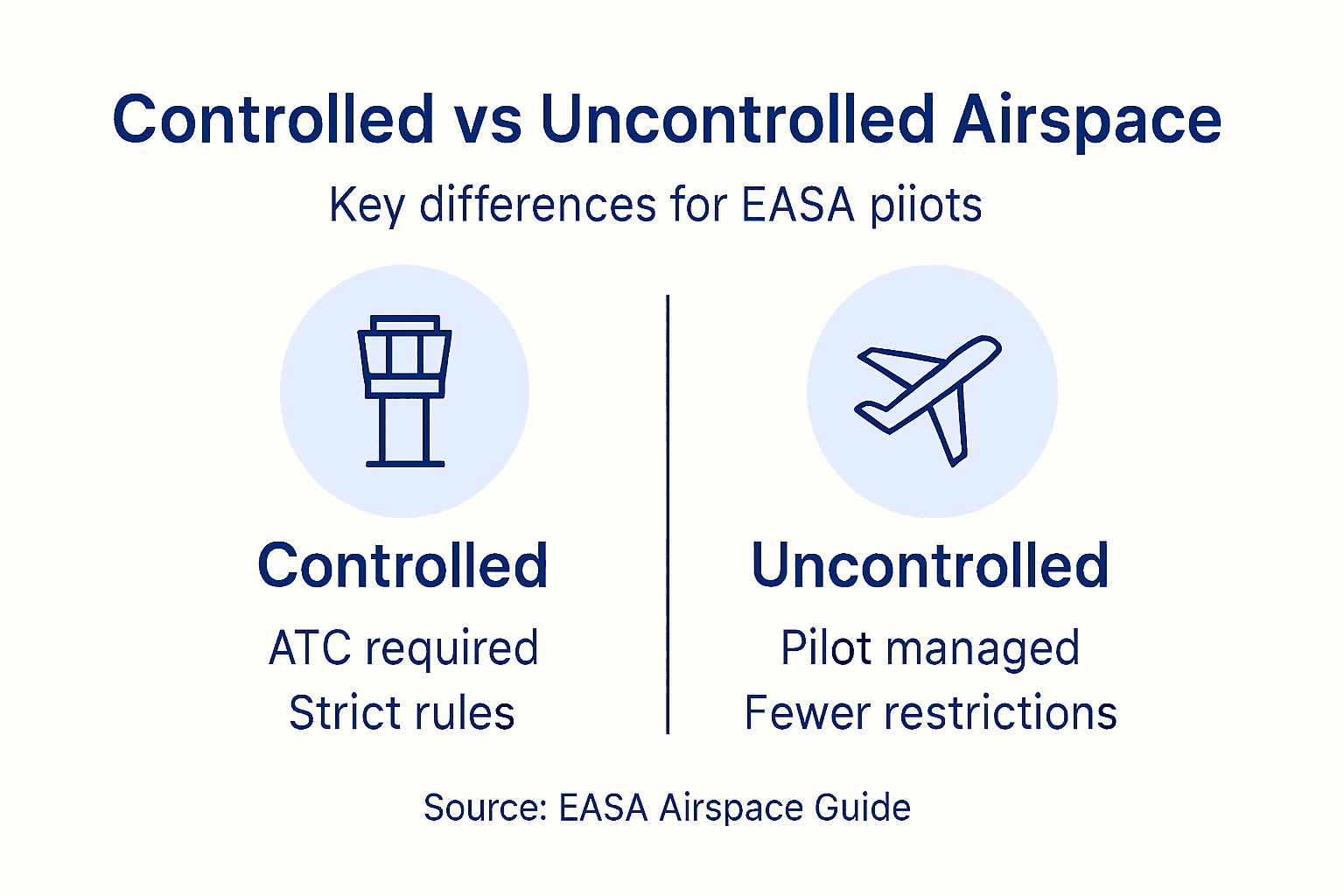
The transition between controlled and uncontrolled airspace represents a critical operational boundary for pilots. In controlled airspace, pilots receive continuous traffic information, precise routing instructions, and guaranteed separation from other aircraft. Uncontrolled airspace, particularly Class G, offers minimal air traffic services, meaning pilots must rely entirely on their own navigation skills, visual scanning, and radio communication to maintain safe separation. This fundamental difference requires pilots to adapt their operational strategies, communication techniques, and risk management approaches depending on the specific airspace classification they are traversing.
Pro tip: Always review airspace charts meticulously before flight and maintain heightened situational awareness when transitioning between controlled and uncontrolled airspace regions.
Pilot Requirements and Responsibilities by Airspace Class
Navigating the complex landscape of European aviation requires pilots to understand their specific responsibilities across different airspace classifications. EASA airspace usage requirements mandate precise equipment, communication, and operational standards that vary significantly between airspace classes, creating a nuanced framework of pilot obligations.
In Controlled Airspaces (Classes A through D), pilots must maintain continuous two-way radio communication with air traffic control, file precise flight plans, and adhere to explicit navigational instructions. These zones demand rigorous compliance with air traffic controller directives, requiring pilots to possess advanced communication equipment and demonstrate exceptional situational awareness. Uncontrolled Airspaces (Classes F and G), by contrast, shift primary safety responsibility directly to the pilot, emphasising the critical ‘see and avoid’ principle and requiring enhanced visual scanning techniques and independent decision-making capabilities.
Each airspace class imposes unique equipment and procedural requirements. Airspace Usage Requirements (AUR) specify mandatory navigation systems, communication protocols, and performance standards that pilots must meet. For instance, Class A airspace exclusively permits instrument flight rules (IFR) traffic and requires sophisticated navigation equipment, while Class G airspace allows both visual and instrumental flight with minimal air traffic control intervention, demanding pilots possess comprehensive situational awareness and independent risk management skills.
Pro tip: Invest in comprehensive airspace classification training and regularly update your knowledge of equipment requirements to ensure compliance across different airspace environments.
Below is a quick reference of pilot responsibilities by airspace type:
| Responsibility Focus | Controlled Airspace (A–D) | Uncontrolled Airspace (F–G) |
|---|---|---|
| Communication protocol | Strict, continuous with ATC | Self-managed, minimal required |
| Navigation guidance | ATC-provided, route instructions | Independent, pilot-driven |
| Separation assurance | Guaranteed by controllers | Pilot visual scanning (see & avoid) |
| Equipment required | Advanced avionics and radios | Basic flight instruments |
Legal Implications and Common Pitfalls for Students
Aspiring pilots must understand that airspace navigation involves significant legal responsibilities beyond technical flying skills. Airspace infringement risks represent a critical area where students can inadvertently compromise their professional standing and potentially face severe regulatory consequences.
The legal landscape surrounding airspace violations is complex and unforgiving. Regulatory Consequences can range from formal investigations and written warnings to potential licence suspensions or revocations. Students often underestimate how seemingly minor infractions, such as inadvertently crossing controlled airspace boundaries or failing to maintain proper communication protocols, can trigger extensive administrative reviews. Pilot infringement tutorials highlight that most violations stem from inadequate preflight planning, insufficient understanding of navigational charts, and poor situational awareness rather than deliberate misconduct.
Understanding the nuanced legal framework is paramount for student pilots. Regulatory bodies like the European Union Aviation Safety Agency (EASA) maintain stringent standards that demand comprehensive knowledge of airspace regulations, communication requirements, and navigation protocols. Potential legal implications extend beyond immediate disciplinary actions and can include mandatory retraining, additional examinations, financial penalties, and long-term professional reputation damage. The legal consequences are designed not as punitive measures, but as critical safety mechanisms to maintain the highest standards of aviation professionalism.
Pro tip: Develop a meticulous preflight planning routine that includes comprehensive chart review, NOTAMs checking, and thorough airspace boundary verification to minimise the risk of unintentional regulatory infractions.
Master Airspace Classes with VictorOne for EASA Pilot Success
Navigating the complex world of airspace classifications is a challenge every aspiring EASA pilot must overcome. The detailed knowledge of controlled and uncontrolled airspaces, communication protocols, and pilot responsibilities highlighted in this article can be overwhelming without proper guidance. Common issues such as understanding separation standards, legal implications of airspace infringements, and adapting to different airspace environments require more than just theoretical knowledge — they demand expert training and practical insight.
At VictorOne, we specialise in delivering comprehensive, fully online aviation theory courses designed to build your confidence and mastery of these crucial topics. Explore our Academy – VictorOne to access expertly crafted materials that clarify airspace classifications and pilot duties according to EASA regulations.

Take control of your aviation career today by joining thousands of students who have advanced their skills through flexible, EASA-approved training at VictorOne.eu. Prepare to face every airspace challenge with confidence and precision. Begin your journey now by visiting our platform and enrolling in courses tailored to set you apart as a professional pilot.
Frequently Asked Questions
What are the different classes of airspace?
The airspace system is categorised into seven classes: A, B, C, D, E, F, and G. Each class has specific operational requirements and services, with Classes A through D representing controlled airspace, while Classes E through G are classified as uncontrolled airspace.
How do controlled and uncontrolled airspaces differ?
Controlled airspace (Classes A through D) consists of zones with comprehensive air traffic control services and guaranteed separation from other aircraft, while uncontrolled airspace (Classes F and G) requires pilots to maintain responsibility for their navigation and separation, relying on visual scanning to prevent collisions.
What are the communication requirements for different airspace classes?
Communication requirements vary by airspace class. In controlled airspaces (Classes A-D), continuous two-way radio communication with air traffic control is mandatory, while in uncontrolled airspaces (Classes F and G), radio communication is often optional, placing greater responsibility on the pilot.
Why are airspace classifications important for pilots?
Understanding airspace classifications is crucial for safety. Different classes dictate the level of air traffic control services, required communication protocols, and pilot responsibilities, significantly affecting navigation and operational safety during flight.