Every aspiring pilot in the British aviation sector depends on the expertise of dedicated flight instructors. With more than 90 percent of European pilots citing their instructor as the greatest influence on their skill development, it is clear these professionals are indispensable. Understanding the exact roles and responsibilities of flight instructors not only highlights their importance but also helps future aviators and aviation organisations choose the right guidance for success and safety.
Table of Contents
- Defining Flight Instructor Roles And Functions
- EASA Categories Of Flight Instructor Ratings
- Core Legal And Qualification Requirements
- Step-By-Step Certification And Training Process
- Role Responsibilities, Liabilities And Career Pathways
Key Takeaways
| Point | Details |
|---|---|
| Flight Instructors Are Essential | They play a critical role in transforming novices into skilled pilots, ensuring safety and comprehensive training. |
| EASA Regulations Govern Qualifications | Stringent standards require instructors to demonstrate extensive knowledge, experience, and instructional capabilities. |
| Structured Certification Process | Aspiring instructors must complete a rigorous pathway involving licensing, advanced ratings, and pedagogical training. |
| Ongoing Professional Development Is Key | Instructors are expected to continually update their skills and knowledge to maintain high training standards. |
Defining Flight Instructor Roles And Functions
Flight instructors form the foundational backbone of aviation training, serving as critical professionals who transform aspiring pilots from novices to skilled aviators. Their roles extend far beyond simply teaching flying techniques; they are responsible for developing comprehensive aeronautical knowledge, ensuring safety protocols, and nurturing the next generation of pilots through rigorous instruction and mentorship.
According to EASA regulations, flight instructors must meet stringent qualification standards that encompass theoretical knowledge, practical experience, and demonstrable instructional capabilities. These professionals are required to be proficient in ground training, pre-flight preparation, in-flight instruction, and post-flight analysis across multiple aviation domains.
The primary functions of a flight instructor include:
- Delivering comprehensive theoretical and practical aviation education
- Assessing student pilot competencies and progression
- Maintaining strict adherence to safety standards
- Developing individualised training strategies
- Providing constructive feedback and performance evaluation
Beyond technical skills, successful flight instructors must possess exceptional communication abilities, patience, and a deep understanding of human learning processes. They are not merely teachers but mentors who guide students through complex aviation challenges, helping them build confidence and professional competence in high-stakes environments. Their role demands continuous learning, adaptability, and a commitment to maintaining the highest standards of pilot training.
EASA Categories Of Flight Instructor Ratings
The European Union Aviation Safety Agency (EASA) has established a comprehensive framework of flight instructor ratings that systematically categorise instructional capabilities across different aviation domains. EASA regulations define multiple instructor categories to ensure precise, specialised training standards for aspiring pilots.
According to EASA’s Easy Access Rules, the primary flight instructor categories include:
- Flight Instructor (FI): Covering Private Pilot Licence (PPL) training
- Class/Type Rating Instructor (CRI): Specialising in specific aircraft types
- Instrument Rating Instructor (IRI): Focused on instrument flight training
- Multi-Pilot Operations Instructor: Preparing pilots for complex commercial aviation environments
- Night Flying Instructor: Specialising in night flight operations
- Aerobatic and Towing Instructors: Handling specialised flight techniques
Each instructor category requires specific qualifications, with EASA’s detailed regulations mandating rigorous training, experience, and continuous professional development. These categories ensure that pilots receive targeted, expert instruction tailored to specific aviation domains, maintaining the highest standards of safety and competence throughout their training journey.

The complexity of these instructor ratings reflects the nuanced skills required in modern aviation. Beyond technical proficiency, instructors must demonstrate exceptional communication skills, adaptability, and a profound understanding of human learning processes. They serve not just as teachers, but as mentors who guide students through the intricate challenges of professional pilot training, ensuring each individual develops the knowledge, skills, and confidence necessary to excel in increasingly sophisticated aviation environments.
Core Legal And Qualification Requirements
Flight instructor qualifications represent a complex legal and professional landscape governed by stringent regulatory frameworks designed to maintain the highest standards of aviation safety and training excellence. The European Union Aviation Safety Agency (EASA) has established comprehensive legal requirements that systematically define the precise qualifications, competencies, and ongoing professional development necessary for individuals seeking to become certified flight instructors.
Under Regulation (EU) 2018/1139, aspiring flight instructors must fulfil multiple critical requirements:
- Demonstrate extensive theoretical knowledge in aviation disciplines
- Hold valid pilot‑in‑command entitlement
- Possess minimum required flight experience hours
- Complete mandatory instructional technique training
- Maintain current medical certification
- Undergo periodic professional competence assessments
- Participate in continuous professional development programmes
The legal qualification process involves rigorous verification of an instructor’s technical expertise, pedagogical skills, and ongoing professional competence. Beyond initial certification, instructors must continuously demonstrate their ability to deliver high‑quality, safety‑focused training across various aviation domains. This dynamic approach ensures that flight instructors not only possess exceptional flying skills but also develop advanced instructional capabilities that adapt to evolving technological and regulatory landscapes in modern aviation.
Step-By-Step Certification And Training Process
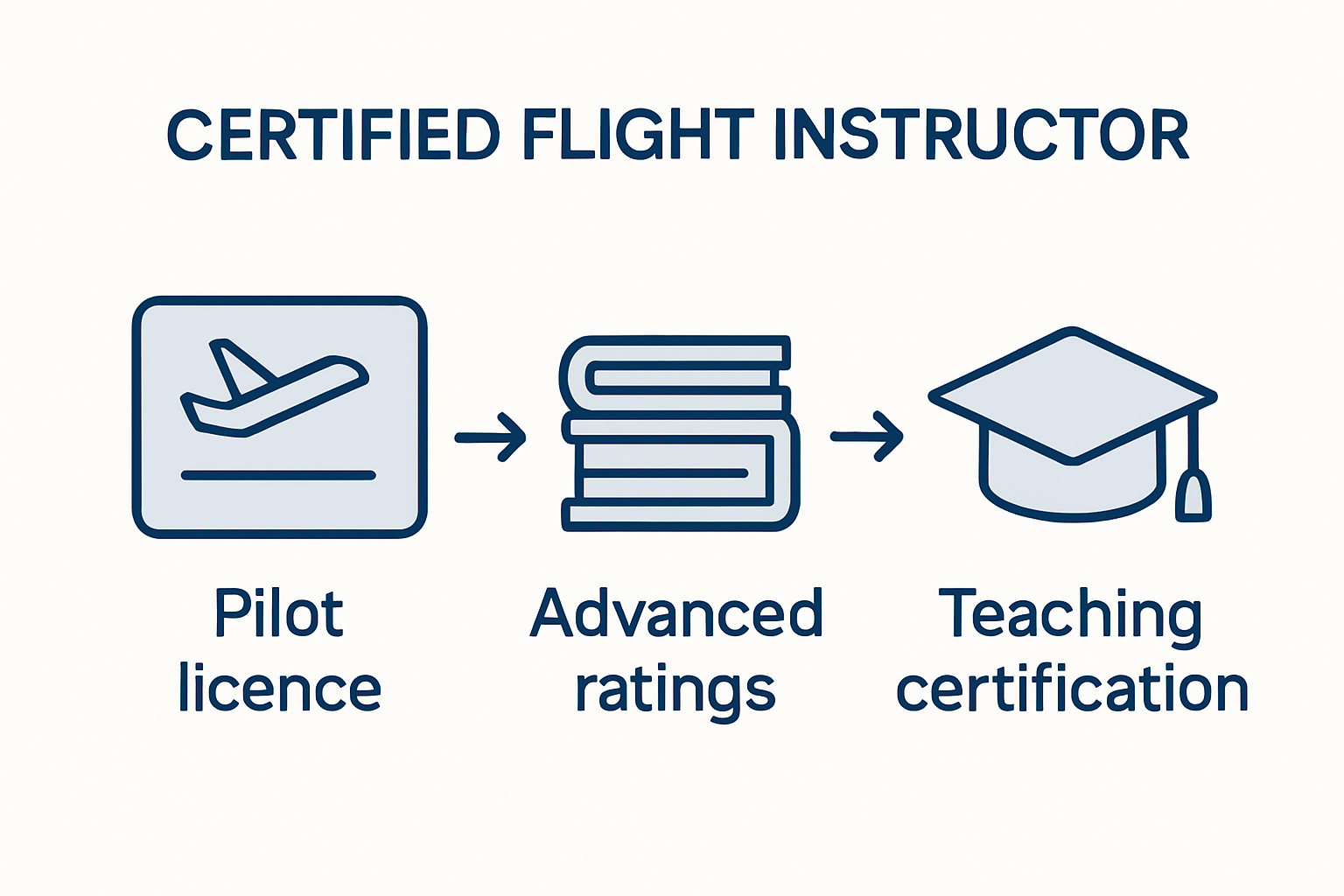
The journey to becoming a certified flight instructor is a structured and rigorous pathway that demands exceptional dedication, technical expertise, and professional commitment. Pilot training programmes require aspiring instructors to navigate a comprehensive series of qualifications, examinations, and practical assessments that systematically build their aviation knowledge and instructional capabilities.
The certification process typically involves the following critical stages:
- Initial Pilot Licensing
- Obtain Private Pilot Licence (PPL)
- Accumulate minimum required flight hours
- Complete advanced theoretical training
- Advanced Ratings
- Acquire Commercial Pilot Licence (CPL)
- Develop instrument rating qualifications
- Gain multi-engine pilot certification
- Instructor-Specific Training
- Complete specialised pedagogical courses
- Pass instructor standardisation examinations
- Demonstrate advanced teaching methodologies
Successful flight instructors must not only master technical flying skills but also develop sophisticated instructional techniques that transform complex aviation knowledge into digestible learning experiences. This multifaceted certification journey ensures that only the most competent, passionate professionals are entrusted with training the next generation of pilots, maintaining the highest standards of aviation safety and educational excellence.
Role Responsibilities, Liabilities And Career Pathways
Flight instructors occupy a critical role within aviation that demands extraordinary professional responsibility, legal accountability, and a nuanced understanding of both technical expertise and human learning dynamics. Aviation career pathways for instructors represent a complex ecosystem of professional development that extends far beyond traditional teaching responsibilities.
Under Regulation (EU) 2018/1139, flight instructors bear comprehensive professional responsibilities:
- Ensuring absolute safety during training scenarios
- Maintaining current technical and pedagogical competencies
- Delivering precise, standardised instructional methodologies
- Managing student progression and skill assessment
- Adhering to strict regulatory compliance standards
- Continuously updating professional knowledge
- Implementing risk management strategies
Career progression for flight instructors typically involves multiple sophisticated pathways, ranging from initial training roles to advanced specialisations like type rating instructors, simulator instructors, and senior training positions within commercial aviation organisations. Successful instructors must demonstrate not just exceptional flying skills, but also advanced interpersonal communication, adaptive teaching techniques, and an unwavering commitment to professional development that transforms theoretical knowledge into practical, life‑saving aviation expertise.
Take the Next Step to Becoming an Expert Flight Instructor
Understanding the detailed flight instructor requirements and certification pathways can feel overwhelming. This article highlights the essential qualifications, legal standards, and complex training processes you must master to excel as a professional aviation teacher. At VictorOne Academy, we provide tailored, EASA-approved online theoretical courses designed to build your foundational knowledge and prepare you for advanced pilot licensing and instructor roles.
Start your journey today with flexible and accessible training that fits your schedule anywhere in the world. Visit VictorOne now to explore our comprehensive course offerings. Learning with us ensures you develop the exclusive skills to confidently meet the rigorous standards of flight instruction while progressing rapidly toward your aviation career goals.
Frequently Asked Questions
What qualifications are required to become a flight instructor?
To become a flight instructor, you must demonstrate extensive theoretical knowledge in aviation disciplines, hold a valid pilot‑in‑command entitlement, possess the minimum required flight experience hours, complete mandatory instructional technique training, maintain current medical certification, and undergo periodic professional competence assessments.
What are the main categories of flight instructor ratings under EASA?
The main categories of flight instructor ratings under EASA include Flight Instructor (FI) for Private Pilot Licence training, Class/Type Rating Instructor (CRI) for specific aircraft types, Instrument Rating Instructor (IRI) for instrument flight training, Multi-Pilot Operations Instructors, Night Flying Instructors, and Aerobatic and Towing Instructors.
What is the process for becoming a certified flight instructor?
The process for becoming a certified flight instructor includes obtaining a Private Pilot Licence (PPL), acquiring a Commercial Pilot Licence (CPL), completing advanced ratings such as instrument rating, and finishing specialised pedagogical courses along with passing instructor standardisation examinations.
What are the responsibilities of a flight instructor?
Flight instructors are responsible for ensuring safety during training scenarios, maintaining current technical and pedagogical competencies, delivering standardised instructional methodologies, managing student progression and skill assessments, adhering to regulatory compliance standards, and implementing risk management strategies.
Recommended
- Understanding Aviation Career Pathways for Aspiring Pilots – VictorOne
- How Can One Become a Pilot: A Step-by-Step Guide – VictorOne
- Complete Guide to Reasons to Become a Pilot – VictorOne
- How to Become an Airline Pilot: Your Step-by-Step Guide – VictorOne
- Residential Engineering Requirements: Complete Guide – FloridaLicensedEngineers.com