Modern aviation is rapidly evolving, with Performance-based Navigation (PBN) now driving major changes in how pilots navigate European skies. Over 80 percent of flights in Central Europe rely on PBN routes, showcasing the urgent need for pilots to master this system in their EASA training. For aspiring aviators aiming to fly standards accepted by British and continental authorities, understanding PBN is crucial for safety, efficiency, and career advancement.
Table of Contents
- Performance-Based Navigation: Core Concept Explained
- Types of PBN Specifications and Their Distinctions
- How PBN Works: Systems and Operational Features
- EASA Regulations for PBN in Central Europe
- Training Requirements for Pilot PBN Qualification
- Risks, Challenges and Common Mistakes in PBN
Key Takeaways
| Point | Details |
|---|---|
| Performance-Based Navigation (PBN) | PBN enhances aircraft navigation by establishing performance standards, allowing for more direct routing and improved efficiency. |
| Types of Specifications | PBN is primarily defined by Area Navigation (RNAV) and Required Navigation Performance (RNP), each offering distinct operational capabilities. |
| Implementation and Training | Effective PBN implementation requires advanced systems, pilot training, and a comprehensive approval process to ensure safety and reliability. |
| Risks and Mitigation | Successful PBN deployment involves addressing challenges such as communication gaps and technological reliability through structured training and regular updates. |
Performance-based navigation: core concept explained
Performance-based navigation (PBN) represents a transformative approach to aircraft navigation that shifts from traditional ground-based systems to a more flexible, precise method of positioning and movement. Unlike conventional navigation techniques that depend on ground infrastructure, PBN establishes specific performance standards that aircraft must meet, enabling more direct routing and enhanced operational efficiency.
At its core, PBN is defined through two primary specifications: Area Navigation (RNAV) and Required Navigation Performance (RNP). These specifications outline precise requirements for aircraft navigation accuracy, integrity, and functionality across different operational environments. ICAO’s comprehensive navigation guidelines highlight how PBN enables point-to-point operations that dramatically improve airspace management and aircraft routing.
The key advantages of PBN are multifaceted. Aircraft can now navigate more precisely, reducing fuel consumption and environmental impact while increasing overall safety. By establishing standardised global navigation performance requirements, PBN supports interoperability across different aviation systems and regions. EUROCONTROL’s PBN Portal emphasises how these standards help harmonise navigation practices, supporting both civil and military operations with unprecedented flexibility.
PBN’s implementation involves several critical components, including advanced satellite-based positioning systems, onboard navigation computers, and rigorous performance monitoring. Pilots must undergo specialised training to understand and execute PBN procedures effectively, ensuring they can leverage these advanced navigation techniques safely and efficiently.
Pro tip: Always review your aircraft’s specific PBN capabilities and stay updated on the latest navigation performance standards during pre-flight preparation.
Types of PBN specifications and their distinctions
Performance-based navigation (PBN) encompasses two fundamental navigation specification families that define how aircraft navigate through airspace: Area Navigation (RNAV) and Required Navigation Performance (RNP). While these specifications might seem similar at first glance, they possess crucial differences that significantly impact aviation operations and navigation strategies.
Area Navigation (RNAV) allows aircraft to fly any desired flight path within the coverage of ground or satellite-based navigation aids. EASA’s comprehensive PBN guide highlights that RNAV specifications enable more flexible routing compared to traditional ground-based navigation systems. These specifications include variants like RNAV 10, RNAV 5, RNAV 2, and RNAV 1, with the number indicating the required navigation accuracy in nautical miles.
In contrast, Required Navigation Performance (RNP) builds upon RNAV by adding a critical requirement: onboard performance monitoring and alerting capabilities. EUROCONTROL’s navigation specification overview emphasises that RNP specifications demand real-time tracking of the aircraft’s navigation performance. This means pilots receive immediate alerts if the navigation system falls outside prescribed accuracy limits, enhancing overall safety and operational precision. RNP specifications include RNP 4, RNP 2, RNP 1, and RNP APPROACH, each defining progressively more stringent navigation accuracy requirements.
The primary distinction between RNAV and RNP lies in their monitoring capabilities. While RNAV provides a navigation framework, RNP adds a layer of real-time performance verification. This makes RNP particularly valuable in complex operational environments like mountainous terrain, oceanic routes, and precision approach procedures where navigation accuracy is paramount.
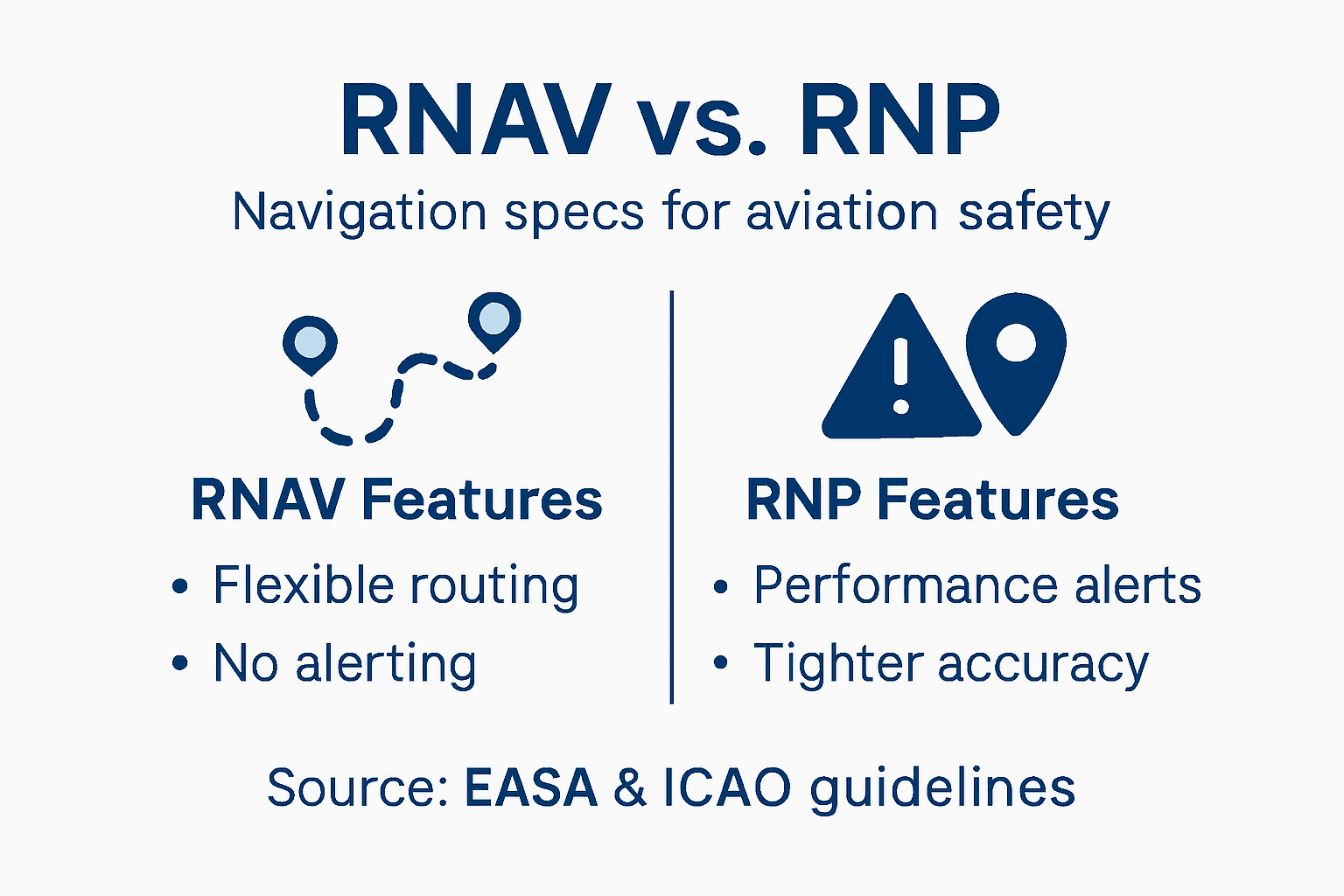
To illustrate the distinctions and uses of RNAV and RNP within PBN, consider this comparison:
| Specification Type | Defining Feature | Common Applications | Example Accuracies |
|---|---|---|---|
| RNAV | Flexible routing via area navigation | En route, standard departures | RNAV 10, RNAV 5, RNAV 2 |
| RNP | Real-time performance monitoring and alerting | Precision approaches, oceanic, challenging terrain | RNP 4, RNP 1, RNP APPROACH |
Pro tip: Always verify your aircraft’s specific RNAV and RNP certification levels before planning complex navigation routes or challenging approach procedures.
How PBN works: systems and operational features
Performance-based navigation represents a sophisticated integration of multiple technological systems and operational protocols that transform aircraft navigation. At its core, PBN combines advanced satellite positioning, onboard computing systems, and precise navigation specifications to enable unprecedented routing flexibility and operational precision.
SKYbrary’s comprehensive navigation overview highlights the three fundamental components of PBN: navigation specifications, navigation infrastructure, and specific navigation applications. These components work synergistically to define precise lateral and vertical navigation paths. The system relies on multiple positioning technologies, including Global Positioning System (GPS), Distance Measuring Equipment (DME), and Satellite-Based Augmentation Systems (SBAS) like European Geostationary Navigation Overlay Service (EGNOS), which provide increasingly accurate positioning data.
The operational mechanism of PBN involves sophisticated flight management systems that process complex navigation data in real-time. EASA’s technical navigation guide explains that these systems continuously calculate an aircraft’s position, compare it against predefined performance requirements, and provide immediate feedback to pilots. This enables more precise route planning, reduced separation between aircraft, and enhanced safety through continuous performance monitoring.
Crucial to PBN’s effectiveness is the comprehensive approval process for aircraft and operators. This involves rigorous validation of navigation equipment, crew training, and operational procedures. The system demands that both aircraft systems and human operators meet stringent performance criteria, ensuring that navigation specifications are consistently and safely implemented across different operational environments.
Pro tip: Regularly update your aircraft’s navigation databases and ensure comprehensive crew training to maximise the operational benefits of performance-based navigation systems.
EASA regulations for PBN in Central Europe
EASA’s regulatory framework for Performance-based Navigation represents a comprehensive strategy to harmonise and standardise aerial navigation procedures across Central European airspace. The cornerstone of these regulations is the Commission Implementing Regulation (EU) 2018/1048, which establishes a structured approach to implementing PBN specifications across European Union member states.
EASA’s air traffic management transition guidance outlines specific navigation specifications that operators must adopt, including RNAV 1, RNP 1, RNAV 5, and RNP APCH. These specifications create a uniform standard for navigation performance, ensuring that aircraft operating in Central European airspace meet consistent and rigorous technological requirements. The regulation mandates progressive implementation deadlines through 2030, allowing operators sufficient time to upgrade equipment and retrain personnel.

The regulatory framework encompasses multiple critical aspects of PBN implementation. European legal documentation specifies detailed requirements for pilot qualifications, navigation equipment standards, and the systematic reduction of ground-based navigation aids. This approach not only improves operational efficiency but also provides contingency planning for potential Global Navigation Satellite System (GNSS) disruptions, ensuring robust and reliable aerial navigation infrastructure.
National aviation authorities in Central European countries are responsible for translating these EASA regulations into specific operational guidelines. This involves updating aeronautical information publications, revising air traffic management procedures, and ensuring that both civil and military aviation sectors align with the new PBN standards. The ultimate goal is to create a seamless, interoperable navigation environment that enhances safety, reduces environmental impact, and optimises airspace utilisation.
Pro tip: Regularly review the latest EASA PBN implementation guidelines and ensure your navigation systems and training remain compliant with the evolving regulatory landscape.
Training requirements for pilot PBN qualification
Pilots pursuing Performance-based Navigation (PBN) qualifications must navigate a comprehensive training landscape that demands both theoretical knowledge and practical proficiency. As of August 2018, European aviation regulations have mandated specific competence standards for instrument-rated pilots seeking PBN endorsements.
EUROCONTROL’s operational authorisation guidelines outline the structured training requirements that encompass both common RNAV and RNP operations. Pilots must demonstrate competence through approved courses covering navigation specifications, covering variants such as RNAV 1, RNP 1, and more advanced specifications like RNP AR APCH. This training requires a blend of theoretical instruction and practical skill demonstration, ensuring pilots can effectively implement PBN strategies across diverse operational environments.
Commission Regulation (EU) 2016/539 provides the regulatory framework for PBN training, establishing standardised benchmarks for theoretical instruction, proficiency checks, and logbook documentation. The regulation includes provisions for transitioning existing instrument-rated pilots, mandating that all Approved Training Organisations (ATOs) incorporate comprehensive PBN training modules. This approach ensures a uniform standard of navigation competence across European aviation, with specific emphasis on understanding navigation performance requirements, system capabilities, and operational limitations.
The qualification process involves multiple stages, including theoretical examinations, flight simulator training, and practical skill assessments. Pilots must demonstrate proficiency in interpreting navigation specifications, managing onboard systems, and executing precise navigation procedures across different operational scenarios. Continuous professional development and periodic revalidation are crucial to maintaining PBN privileges and staying current with evolving technological and regulatory standards.
Pro tip: Invest in comprehensive simulation training and regularly update your technical knowledge to stay ahead of PBN qualification requirements and maintain your competitive edge in modern aviation.
Risks, challenges and common mistakes in PBN
Performance-based Navigation (PBN) implementation presents a complex landscape of technical, operational, and stakeholder challenges that demand comprehensive understanding and strategic mitigation. While PBN offers significant navigation improvements, pilots and organisations must navigate a nuanced terrain of potential risks and implementation hurdles.
National Academies research identifies multiple critical challenges in PBN deployment, including intricate stakeholder coordination, procedural design complexity, and significant variations in avionics capabilities. The most prevalent risks emerge from inadequate communication between airport operators, regulators, and flight crews, potentially compromising navigation precision and safety. Technical challenges such as Global Navigation Satellite System (GNSS) reliability and legacy aircraft equipment compatibility further complicate implementation strategies.
Netherlands’ PBN roadmap highlights common implementation mistakes that can undermine PBN effectiveness. These include insufficient pilot and air traffic controller training, underestimating procedure design complexity, and failing to engage local communities affected by airspace modifications. Typical operational mistakes involve misinterpreting navigation specifications, inadequate system monitoring, and incomplete understanding of performance requirements.
Mitigating these risks requires a multifaceted approach. Organisations must invest in comprehensive training programmes, develop robust communication protocols, and maintain rigorous equipment validation processes. Continuous professional development, regular system updates, and proactive stakeholder engagement are crucial to successfully navigating the challenging PBN implementation landscape.
Below is a summary of key risks and targeted mitigation strategies relevant to PBN implementation:
| Key Risk Area | Typical Challenge | Mitigation Strategy |
|---|---|---|
| Stakeholder Coordination | Conflicting requirements or expectations | Establish clear cross-sector communication channels |
| Technology Reliability | GNSS outages or outdated avionics | Ensure fallback navigation procedures and regular equipment upgrades |
| Training Gaps | Insufficient skills among pilots/controllers | Implement structured recurrent training and skill assessments |
| Procedure Complexity | Errors in design or misinterpretation | Apply rigorous procedure validation and standardise documentation |
Pro tip: Conduct regular cross-functional training sessions and maintain detailed documentation of navigation performance to identify and address potential PBN implementation challenges proactively.
Master Performance-Based Navigation With Confidence and Flexibility
Navigating the complexities of Performance-based Navigation requires specialised knowledge and up-to-date training to meet stringent aviation standards. This article highlights key challenges such as understanding RNAV and RNP specifications, managing onboard systems, and maintaining compliance with EASA regulations — challenges every modern pilot must overcome for safety and career advancement. If you are aiming to excel in these critical areas, VictorOne has designed comprehensive courses targeting exactly these skills within our Academy – VictorOne framework.

Begin your journey towards mastering PBN procedures with our fully online, EASA-approved theoretical training. Flexible digital materials, interactive question banks and expert online consultations prepare you for practical realities and regulatory requirements alike. Discover how you can boost your pilot qualifications and confidently face the demands of advanced navigation by visiting VictorOne.eu. Explore our Aircraft – VictorOne resources to deepen your operational knowledge and take the next step in your aviation career today.
Frequently Asked Questions
What is Performance-based Navigation (PBN) in aviation?
Performance-based Navigation (PBN) is a modern approach to aircraft navigation that focuses on specific performance standards rather than relying on traditional ground-based navigation systems. It enables more direct routing and increased operational efficiency through specifications like Area Navigation (RNAV) and Required Navigation Performance (RNP).
How does PBN improve operational efficiency for pilots?
PBN allows aircraft to navigate more precisely, which reduces fuel consumption and environmental impact while enhancing overall safety. It enables point-to-point operations, allowing for direct routing and improved airspace management.
What are the key differences between RNAV and RNP specifications?
RNAV facilitates flexible routing based on area navigation, while RNP includes onboard performance monitoring and alerting capabilities. This means RNP provides real-time tracking of navigation accuracy, which is essential for operations in complex environments and precision approaches.
What training is required for pilots to qualify in PBN operations?
Pilots must complete structured training that covers both RNAV and RNP specifications, including theoretical knowledge and practical proficiency. This training ensures pilots can effectively implement PBN strategies across various operational environments.